Challenge
Show people what sharks really are: why they matter, what threatens them, and what anyone can do to protect them.
A shark-shaped awareness brochure on why sharks matter and what threatens them
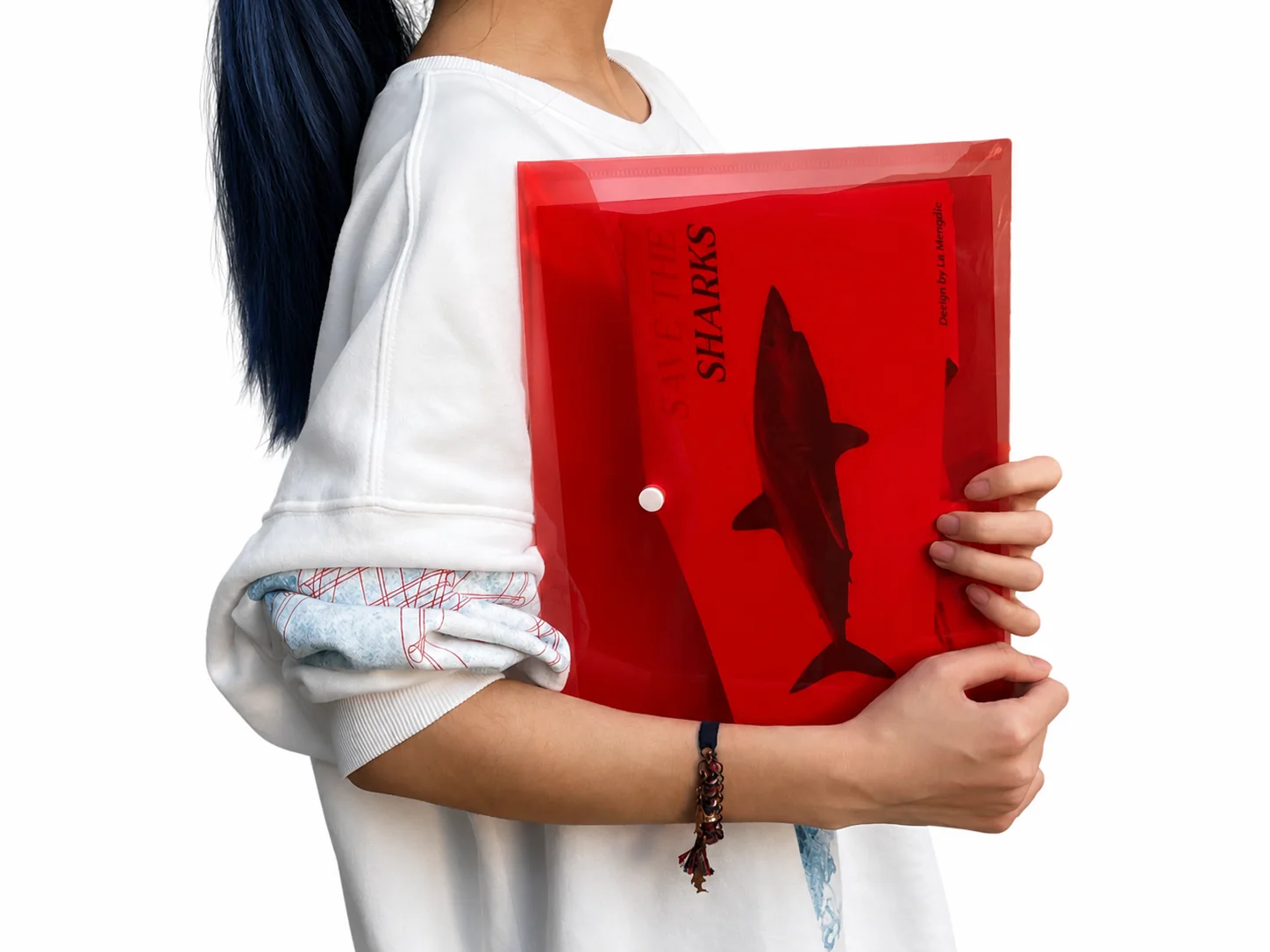
Show people what sharks really are: why they matter, what threatens them, and what anyone can do to protect them.
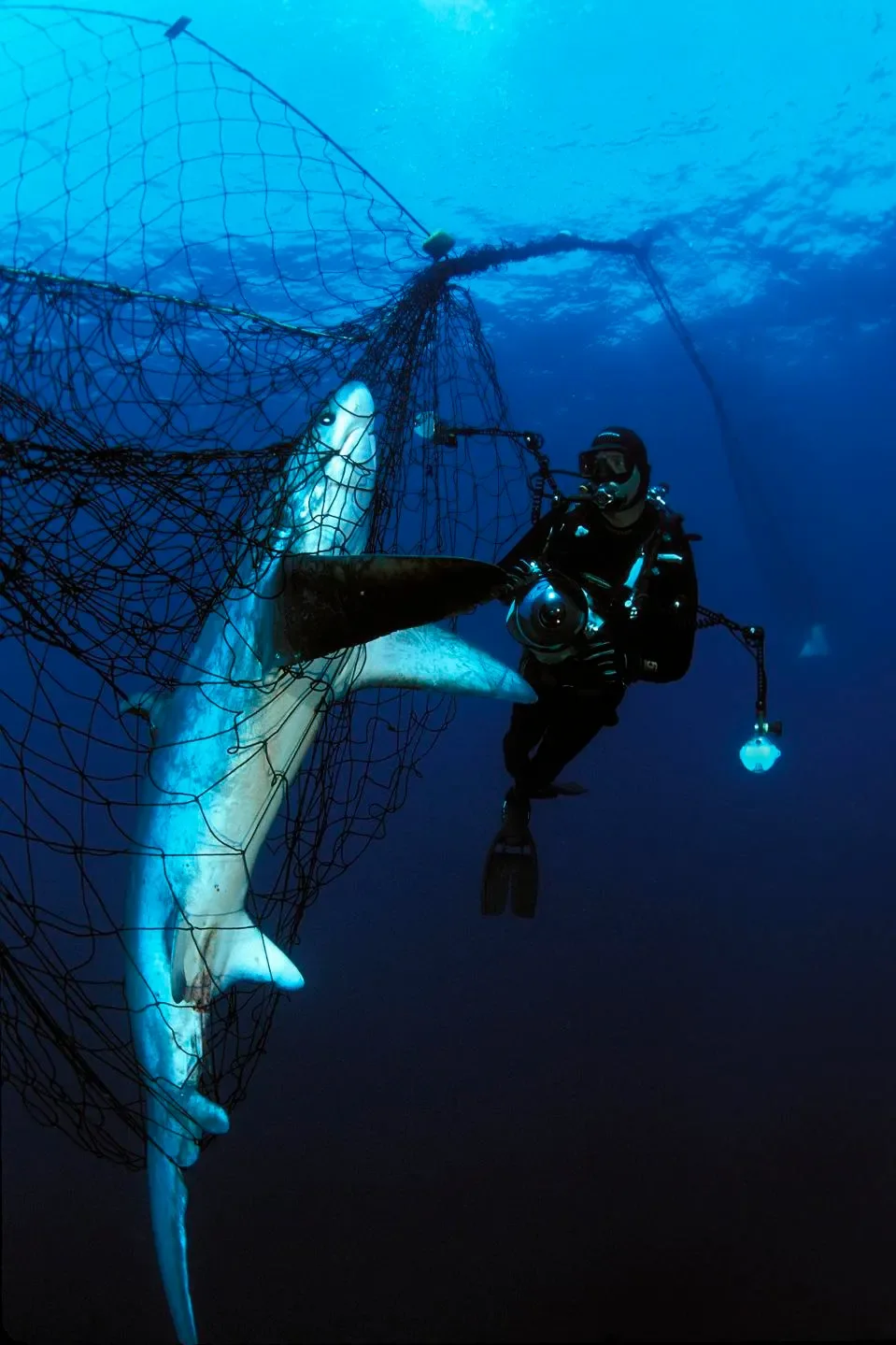
Sharks play a vital role in maintaining the balance of marine ecosystems, yet they are increasingly under threat. Among these threats, bycatch is one of the most significant, but it remains largely unfamiliar to the public.
Since the release of Jaws, sharks have also been widely misunderstood and negatively portrayed. Even today, many people still believe that all sharks are aggressive or dangerous to humans.
This brochure aims to present factual information about sharks, challenge common stereotypes, and explain why sharks matter, what threats they face, and what actions can be taken to protect them.
The cover uses a multiply overlay effect with a red translucent folder. When the brochure is placed inside the folder, only part of the image is visible: a single shark silhouette. Once the brochure is taken out, the red fishing net appears, revealing the shark as trapped within it.

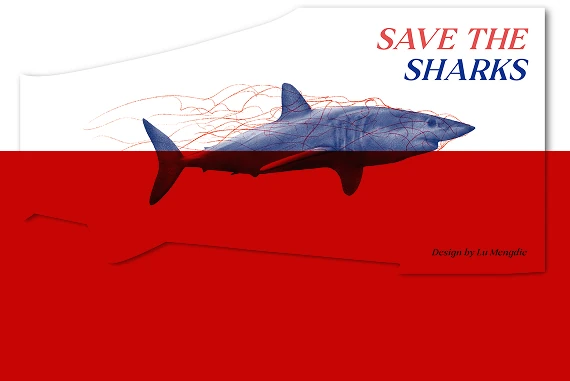
The effect after removing the brochure from the folder: the red lines of the net appear around the shark.
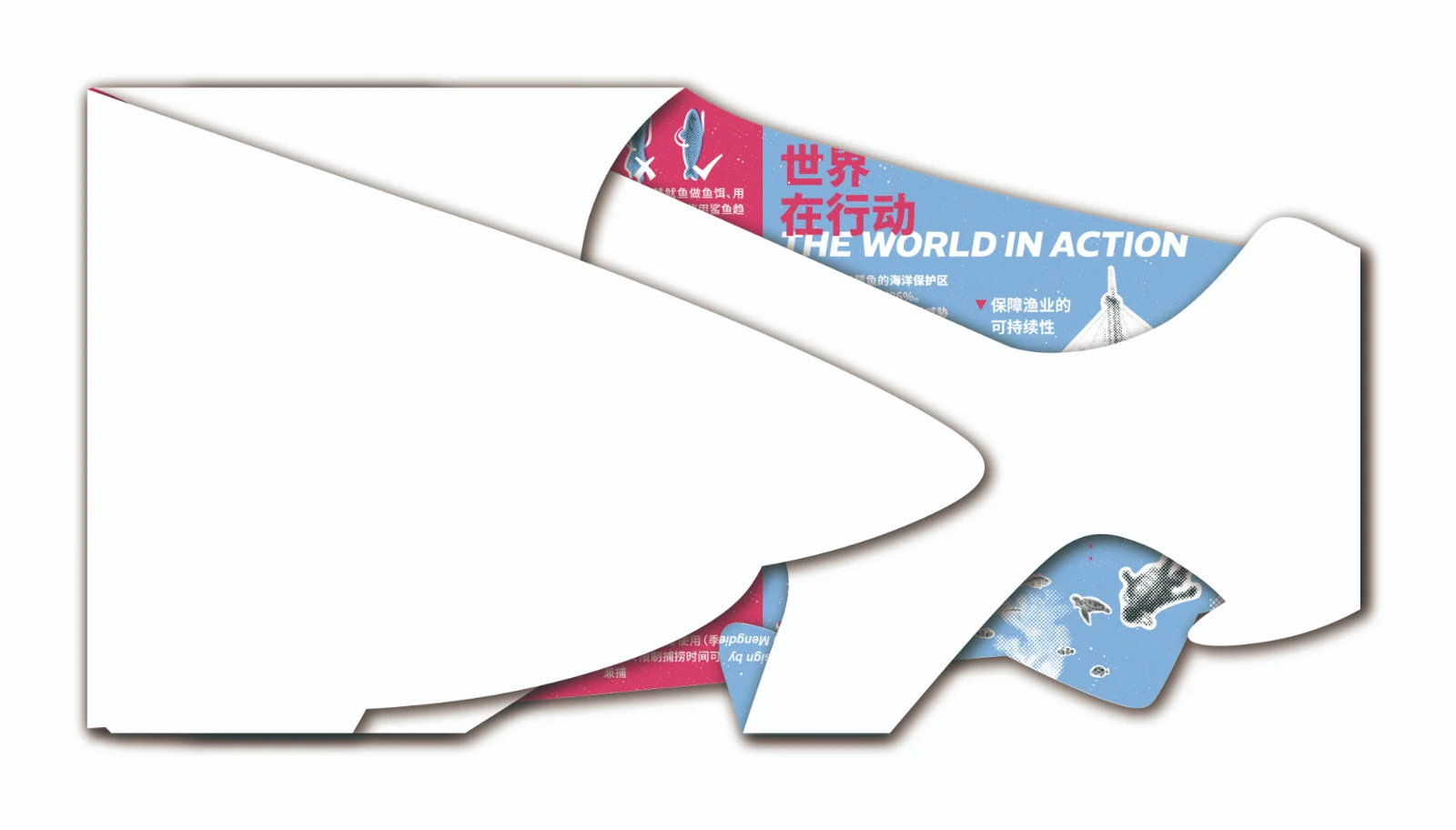
With the brochure’s back removed from the folder, the full image and message are revealed.
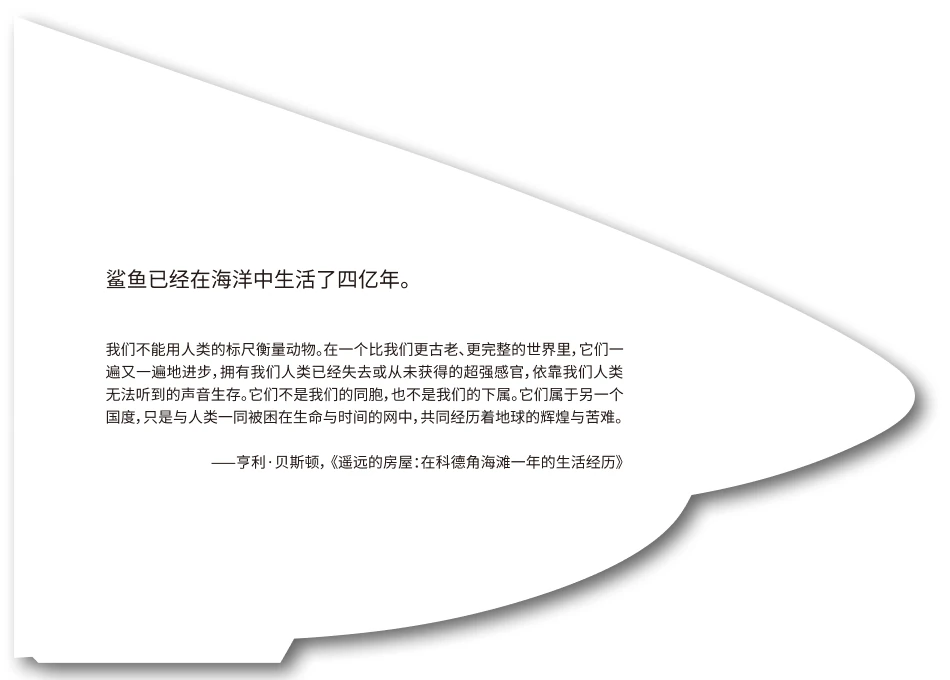
The first content the reader sees after taking out the brochure is a quote that I find deeply moving.
“We need another and a wiser and perhaps a more mystical concept of animals. Remote from universal nature, and living by complicated artifice, man in civilization surveys the creature through the glass of his knowledge and sees thereby a feather magnified and the whole image in distortion.
They are not brethren, they are not underlings; they are other nations, caught with ourselves in the net of life and time, fellow prisoners of the splendour and travail of the earth.”
Henry Beston, The Outermost House: A Year of Life on the Great Beach of Cape Cod
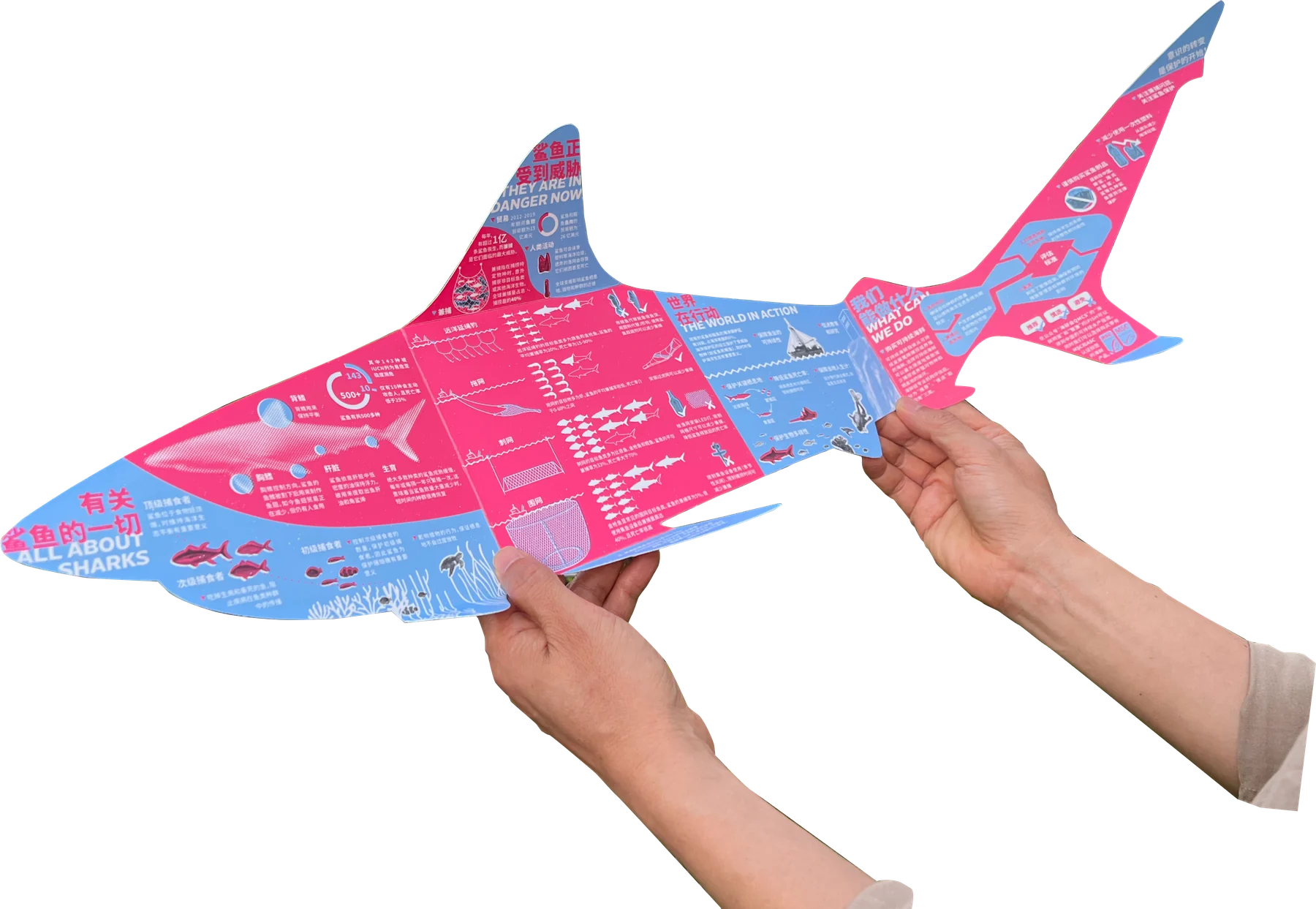
Divided by vertical folds, the brochure uses red and blue areas to guide readers from basic knowledge to threats, global action, and personal responsibility.
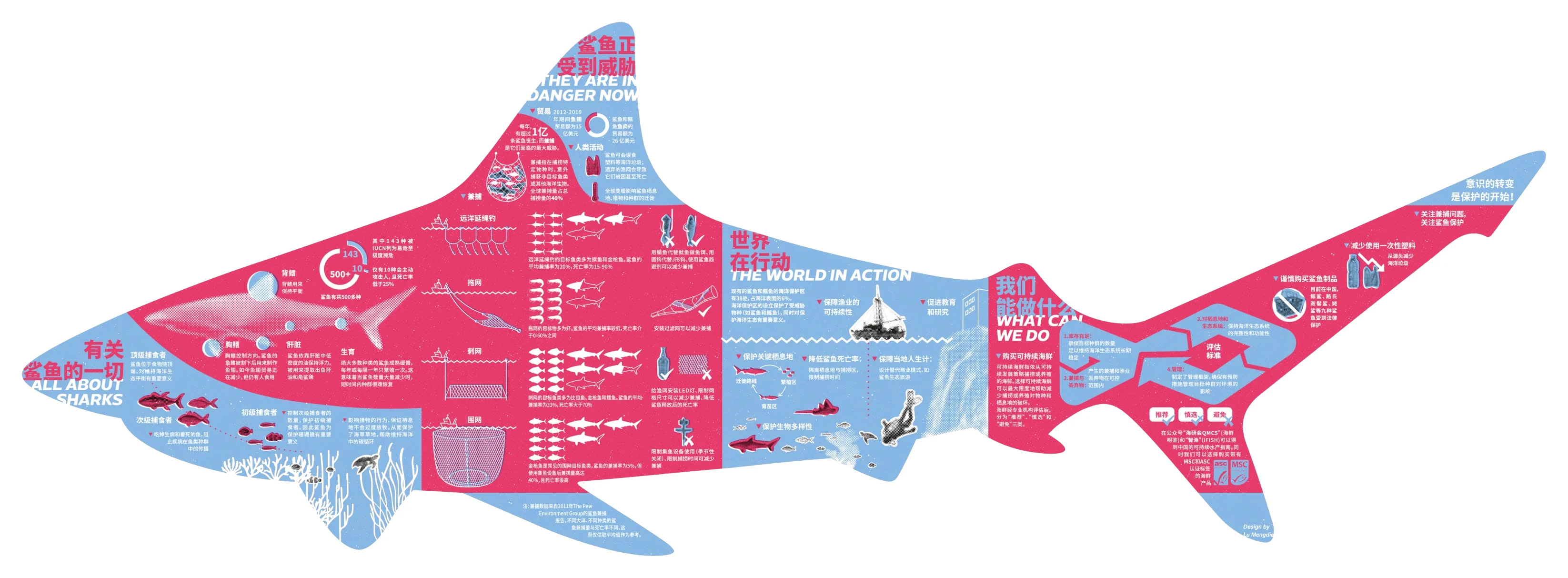
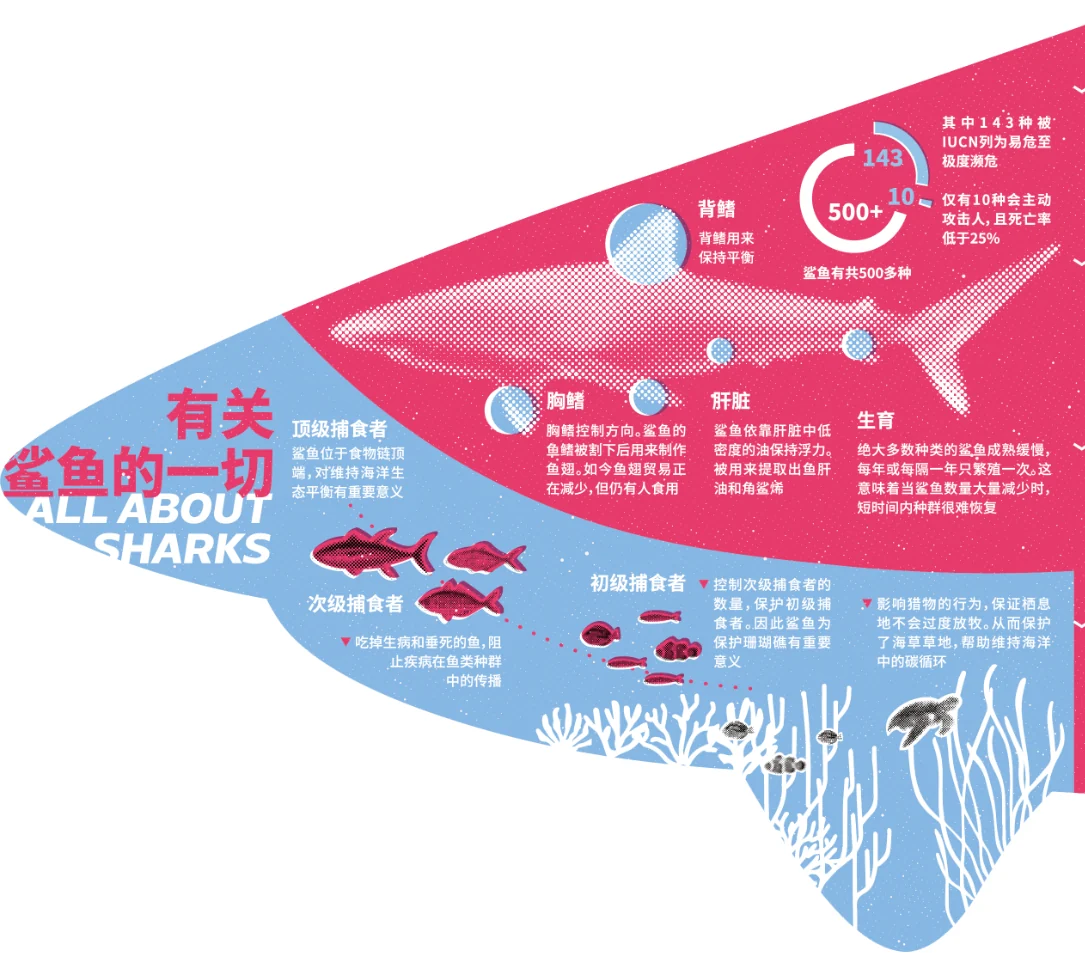
This section introduces sharks and explains why they matter.
The red area uses the shark’s body as a visual framework to present key facts about sharks, including their diversity, endangered status, body structure, and biological characteristics.
In the blue area below, the food chain diagram explains how sharks function within the marine ecosystem, and why their presence is important for maintaining ecological balance.
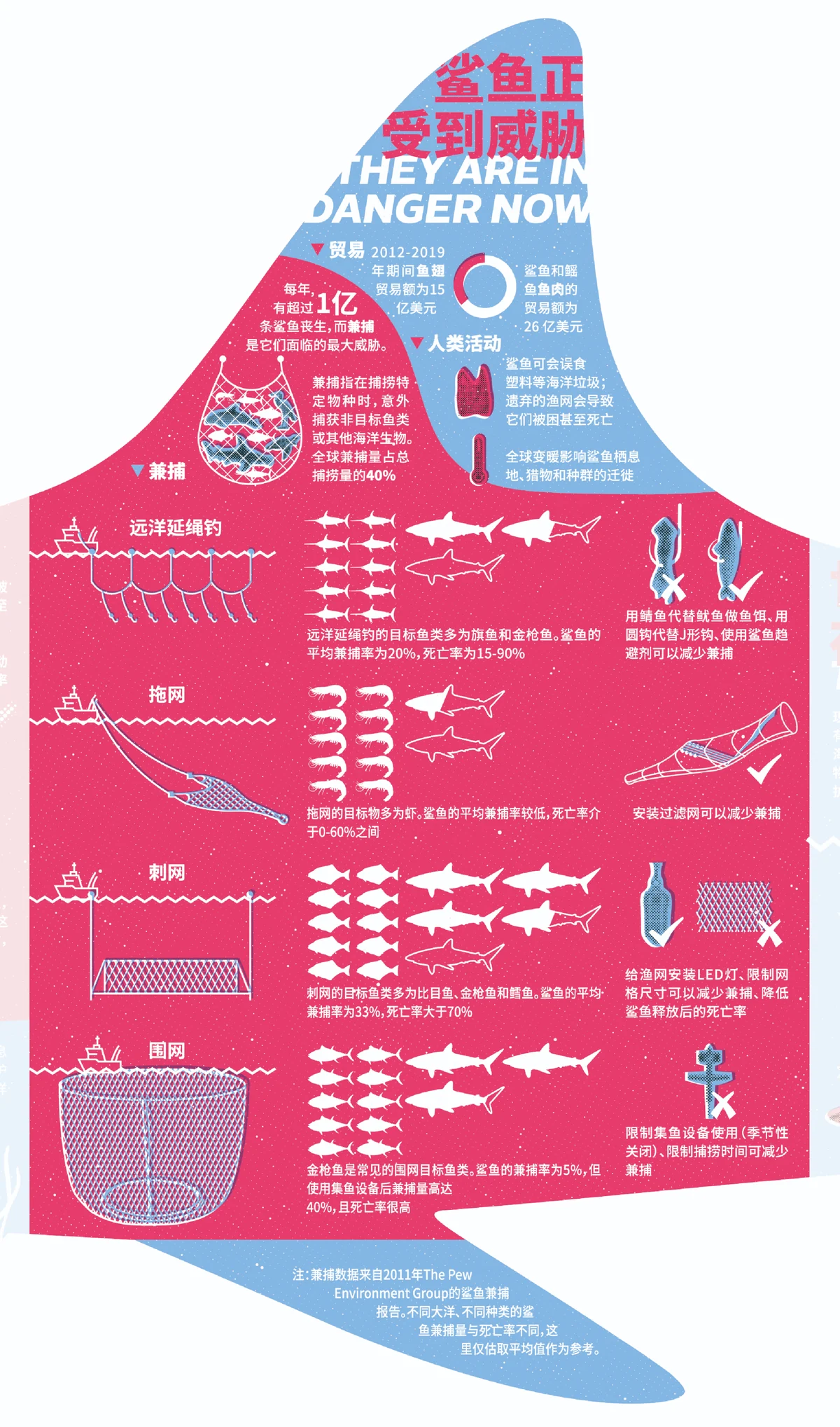
This section explains the main threats sharks are facing today.
The upper blue part introduces shark trade and human impacts, including fin and meat trade, plastic pollution, and global warming.
The red area focuses on bycatch, the most overlooked threat. I used data visualization to compare different types of fishing nets, showing their bycatch rates, mortality rates, and possible improvements.
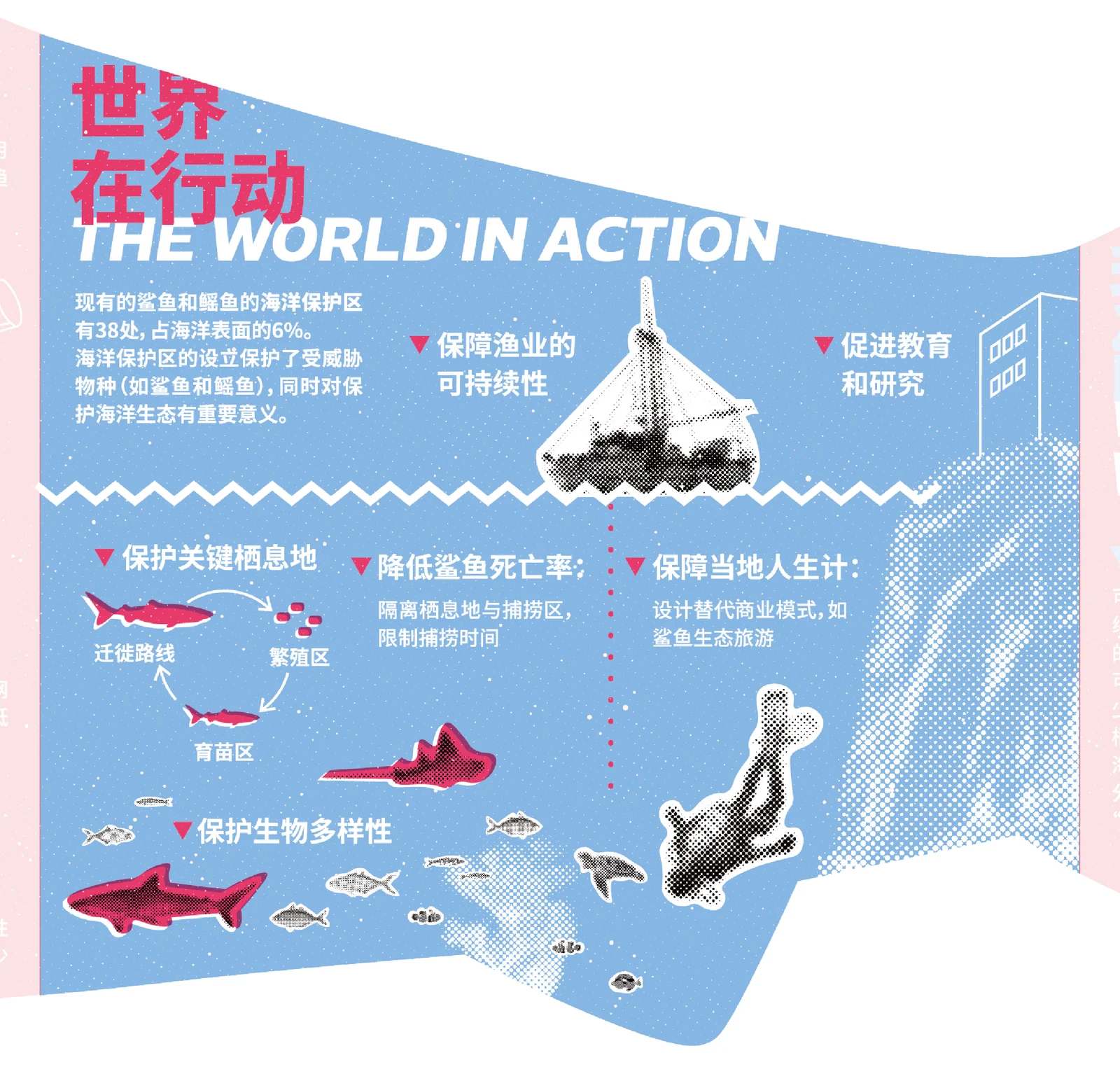
This section introduces marine protected areas as one of the key responses to shark conservation.
The white elements focus on the benefits for people.
The red highlights show the ecological benefits of marine protected areas.
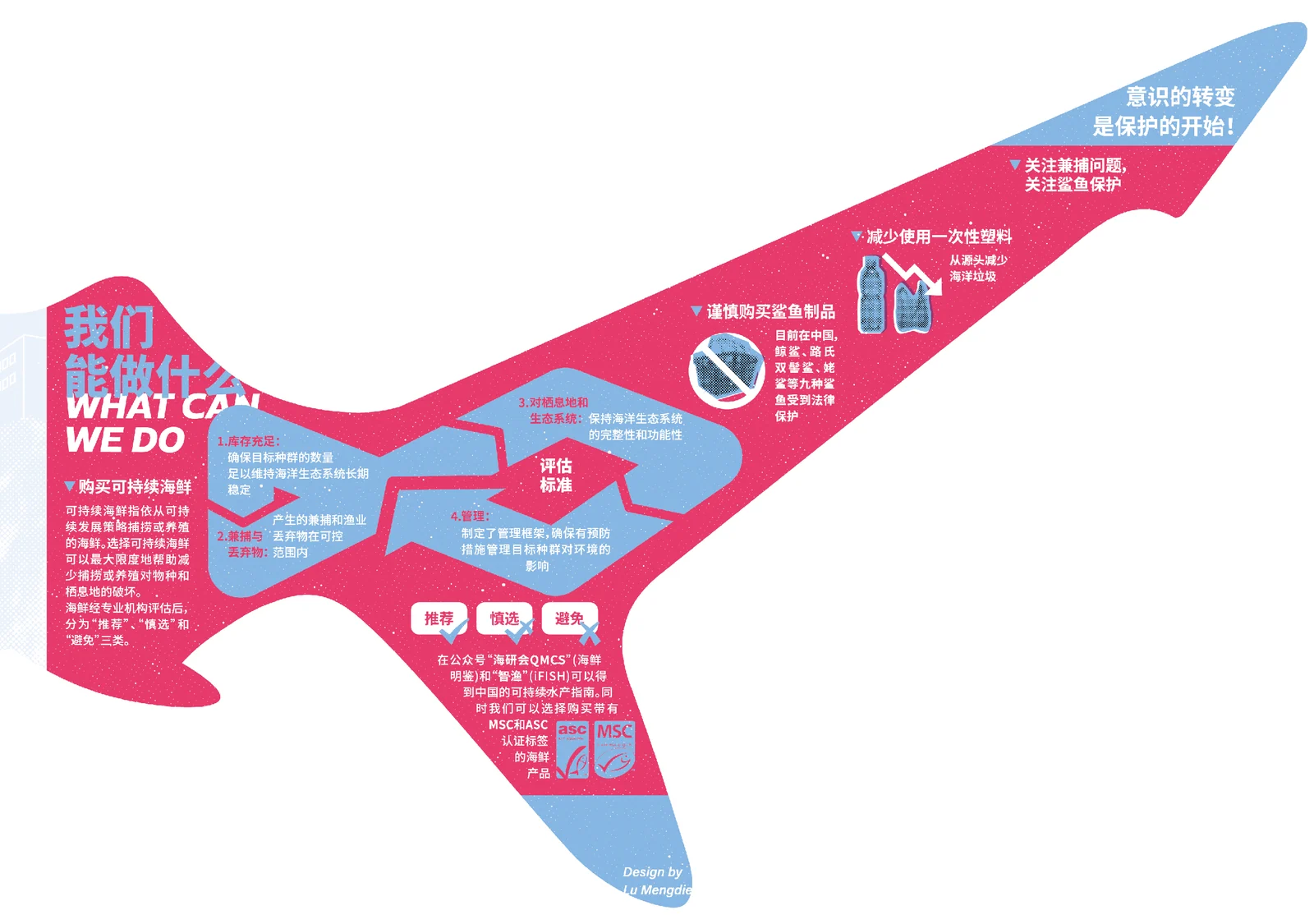
The final section shifts the focus to individual action.
It shows how shark conservation can be connected to everyday choices, from choosing sustainable seafood to reducing single-use plastics and supporting legal protection.
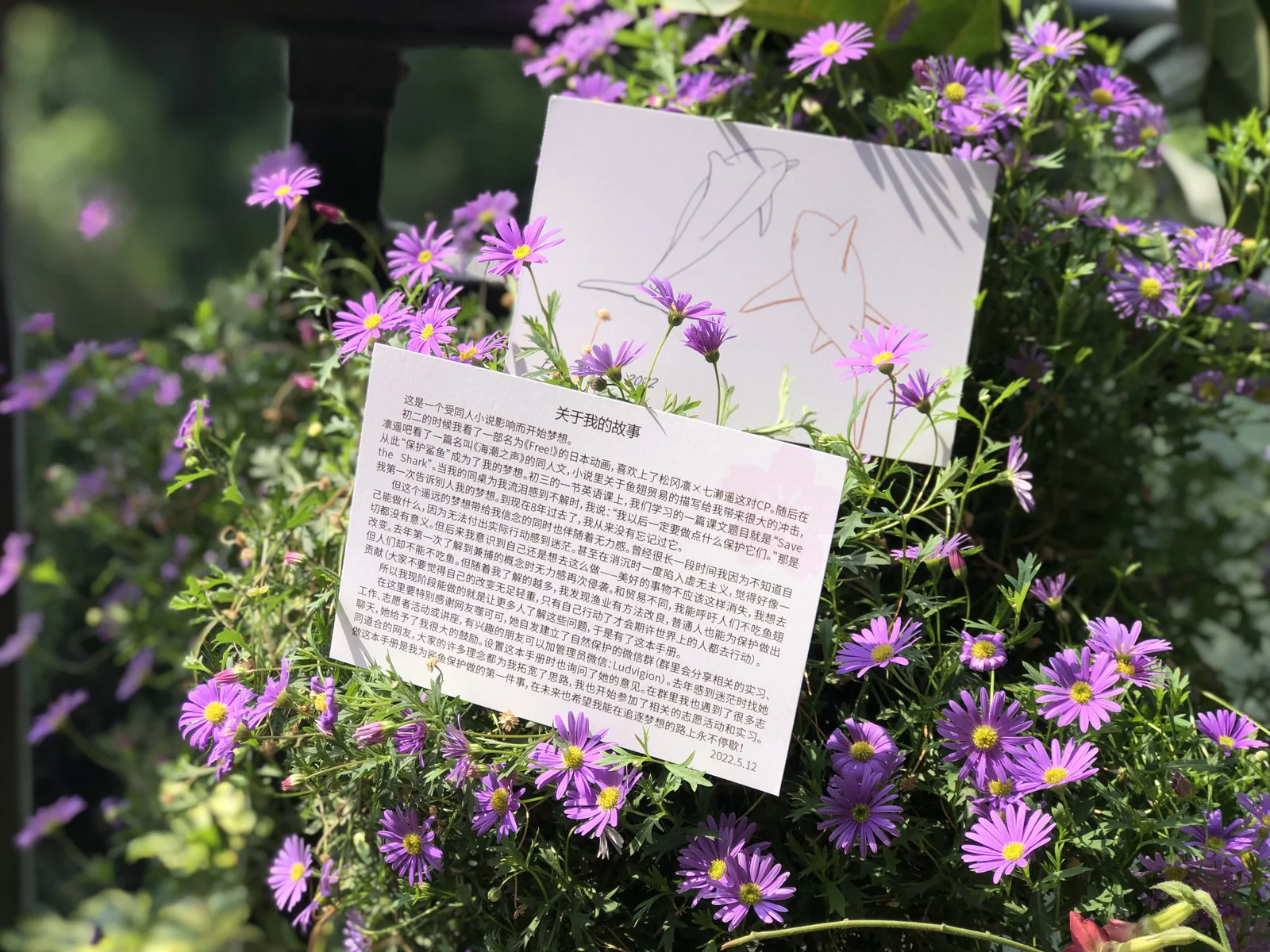
The brochure also comes with a postcard, where I share the personal story behind why I wanted to create this project. It adds a more intimate layer to the work, connecting the issue of shark conservation with my own motivation as a designer.
May I never stop moving towards what I dream of.
Next in the file
 Relif
Aug 2024 — Nov 2025
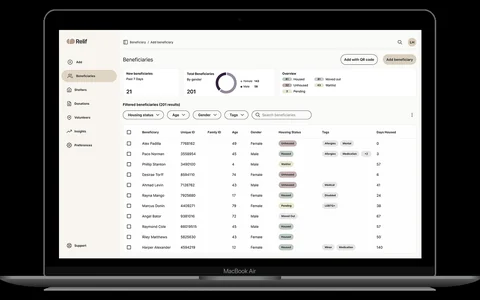
A humanitarian platform that helps response teams manage beneficiaries, housing, inventory and aid distribution in one place.
P-ID 0824 1125 · 05
Relif
Aug 2024 — Nov 2025
A humanitarian platform that helps response teams manage beneficiaries, housing, inventory and aid distribution in one place.
P-ID 0824 1125 · 05