Challenge
How might a home be redesigned as a shared habitat, and how might that change the way people see their relationship with other species?
A room tour of a home shared with birds, insects and the life underground
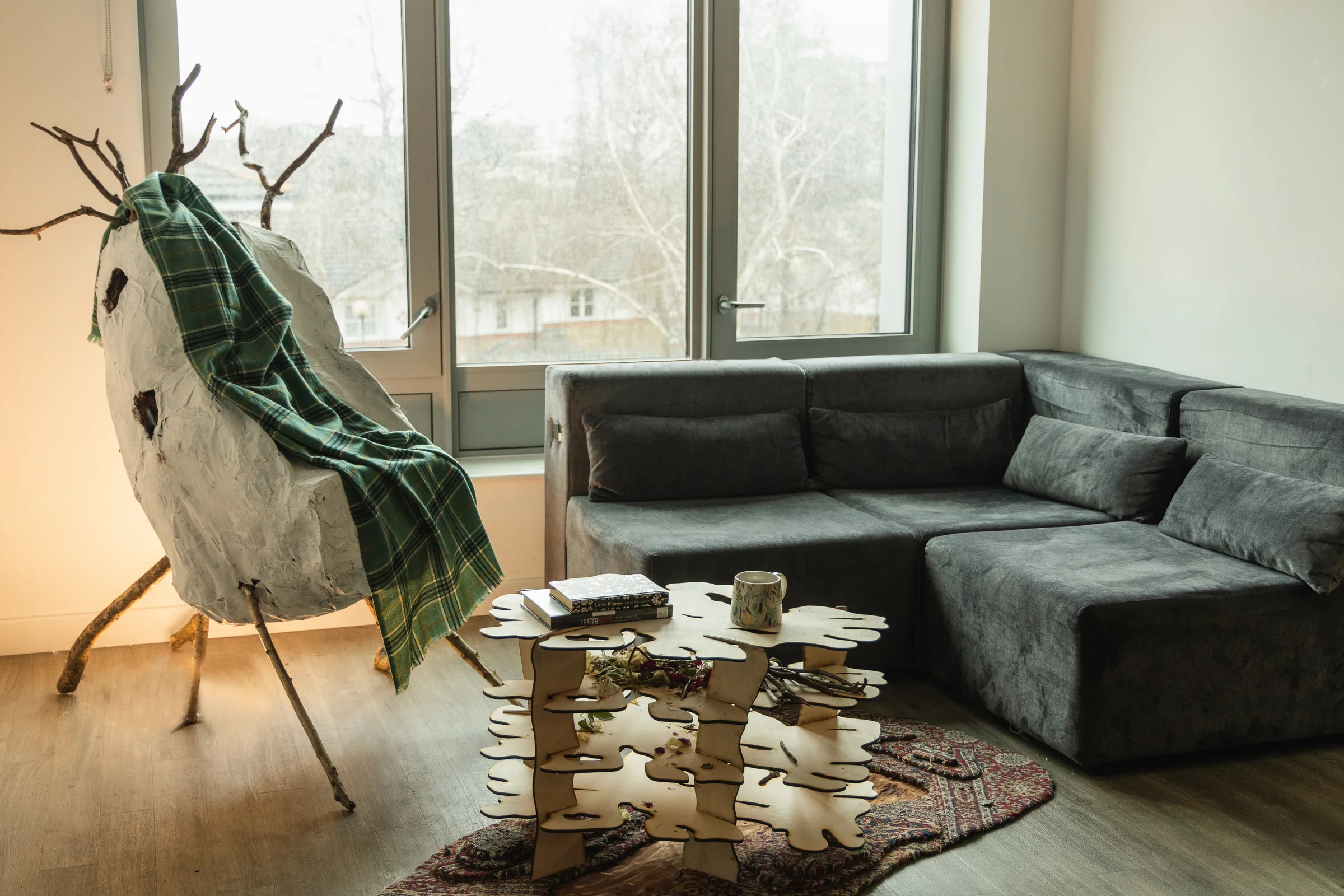
How might a home be redesigned as a shared habitat, and how might that change the way people see their relationship with other species?
Sustainable design often focuses on reducing human impact, but still treats humans as the main users of space. In domestic environments, non-human species are usually excluded, controlled, or treated as unwanted intruders.
We set out to create a speculative room tour that invites visitors to experience domestic space from a non-human perspective. Through research, observation, prototyping and immersive room design, we explored how furniture, materials, movement and sensory cues could support the idea of multispecies co-living.
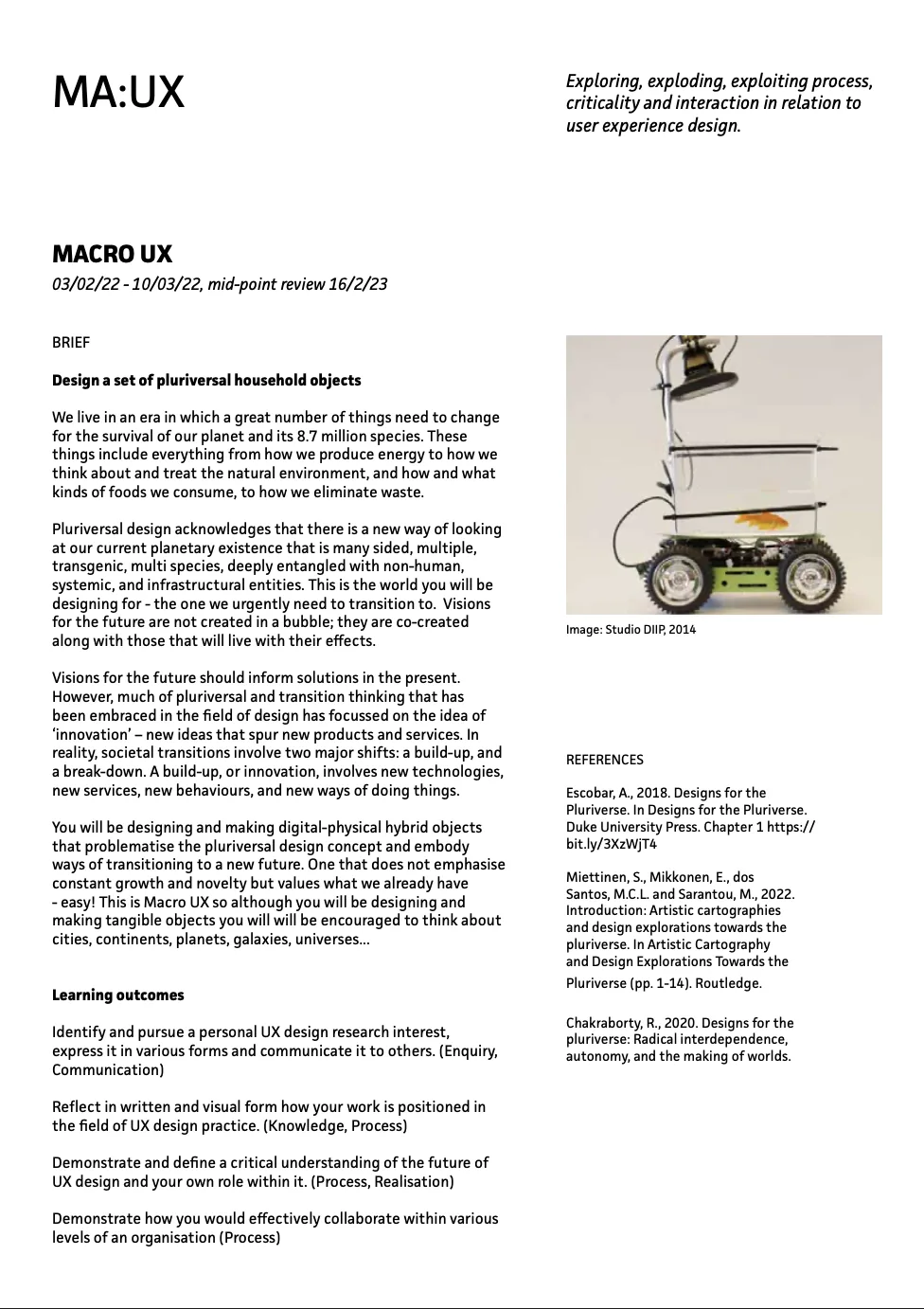
To understand both human habits and non-human habitats, we used three research methods across domestic and natural settings.
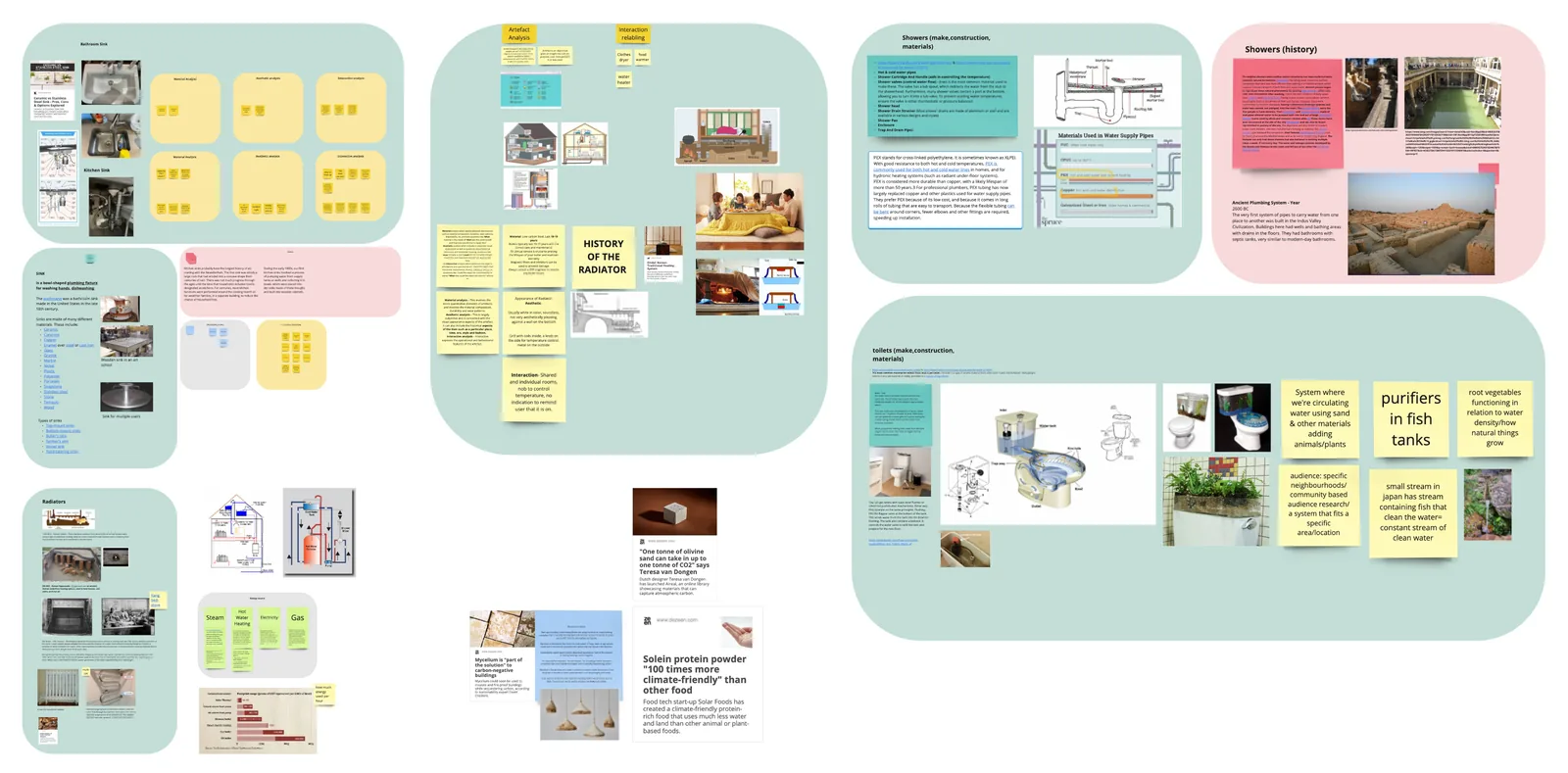
We studied household products and existing sustainable designs to see how domestic objects are usually designed around human needs.
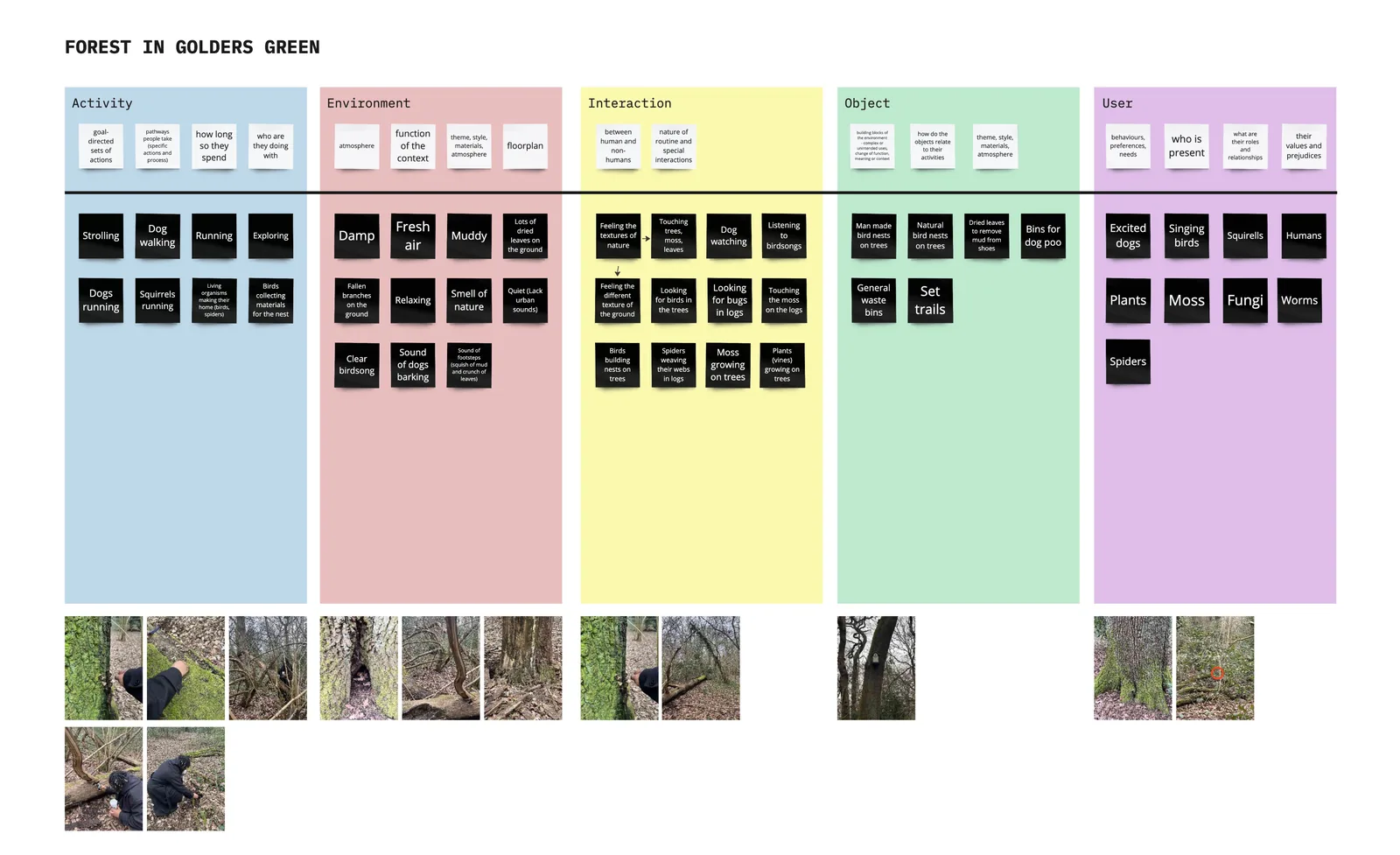
We observed homes and forests, focusing on activities, interactions, materials, and the living conditions of local plants and animals.
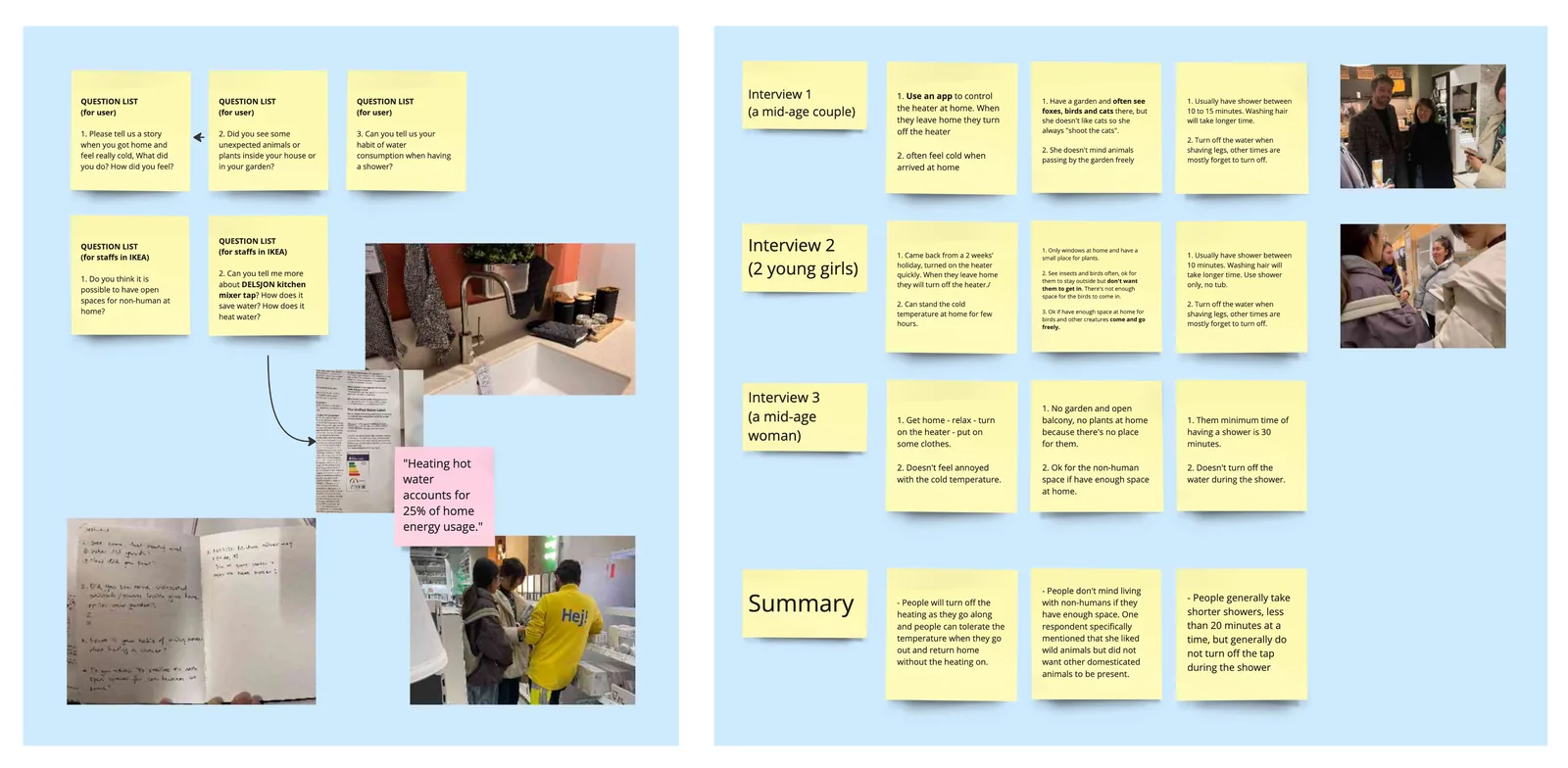
We talked with people about their energy use, domestic habits, and how open they were to sharing space with other species.
From the research insights, we used brainstorming and early sketches to imagine a future co-living room, where furniture could become habitats for insects, birds and underground organisms.
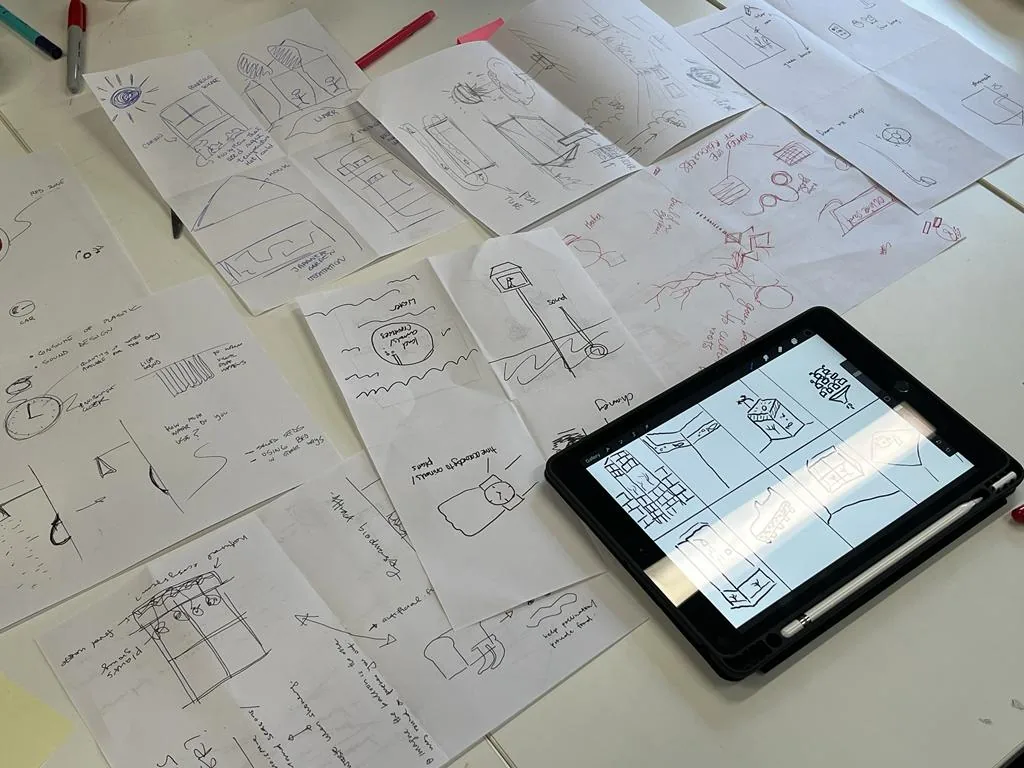
Building on the research, we explored future household objects that could serve both people and non-human habitats.
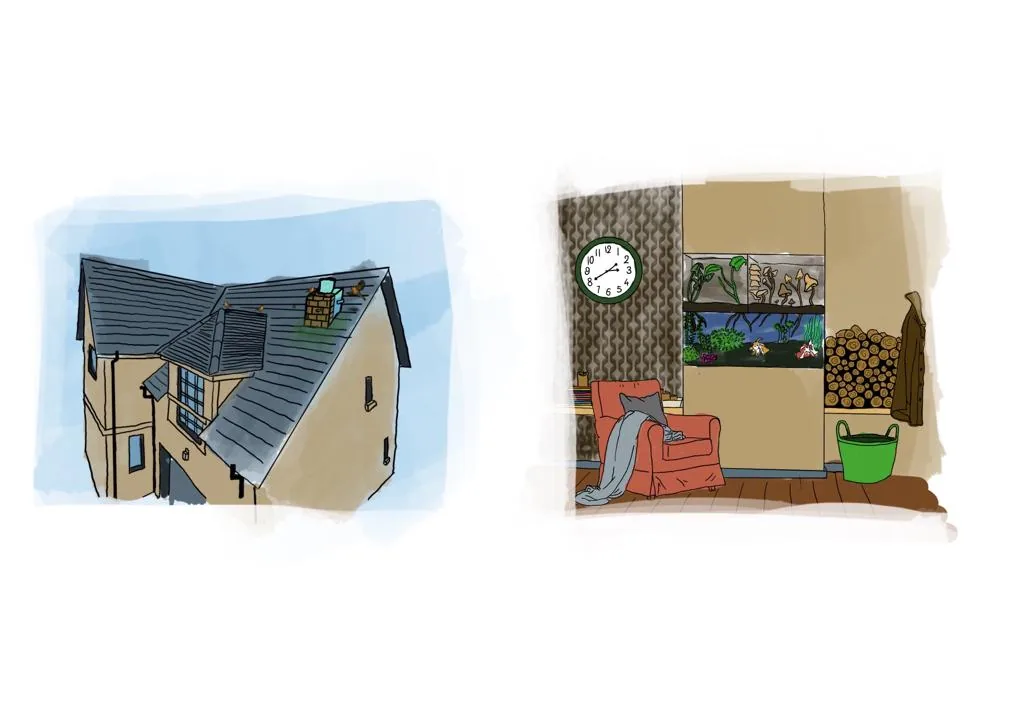
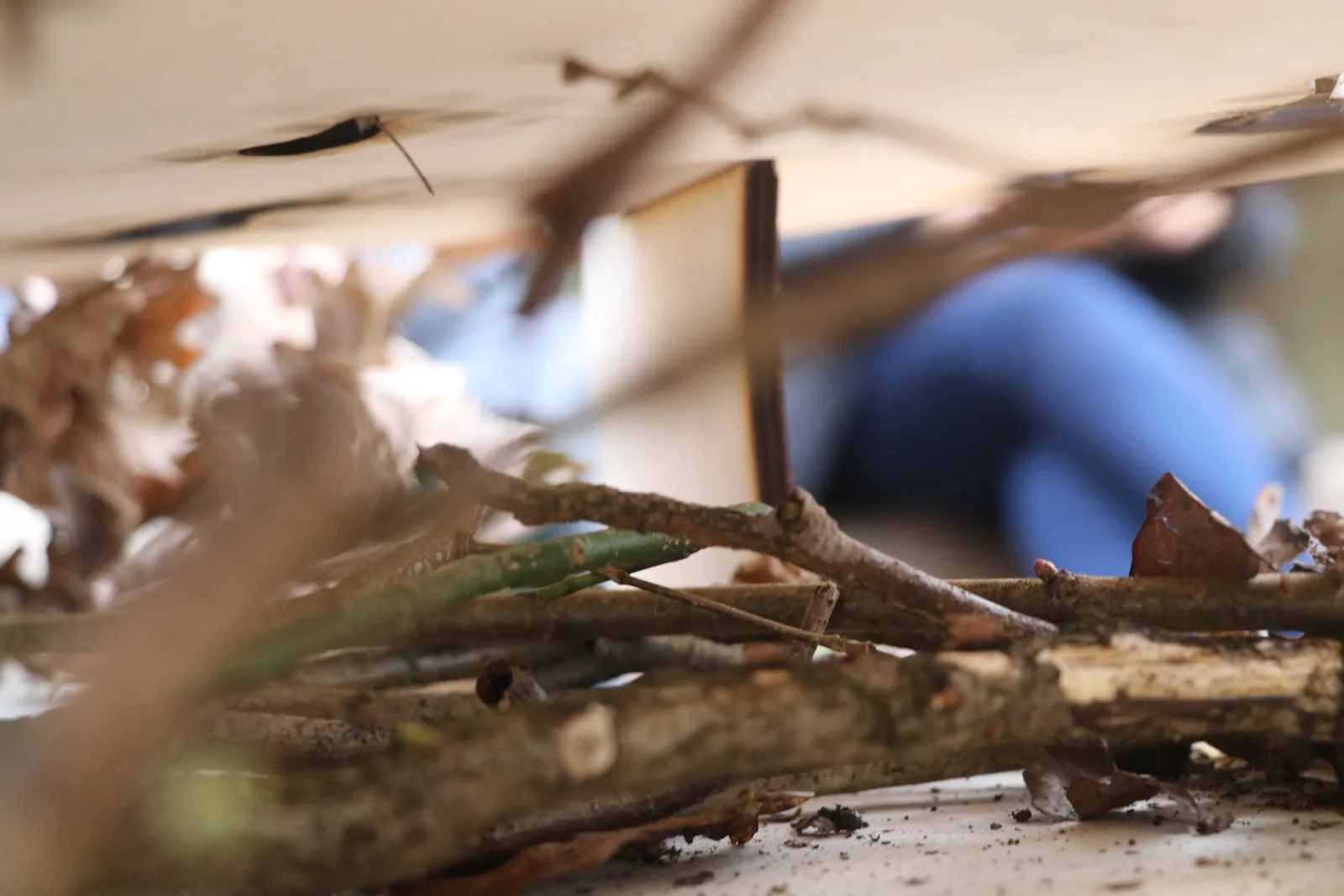
The chimney became the key spatial idea. Rather than a barrier, it is a passage between the home and the outside world, and it has visitors enter the room from a lower, less human-centered viewpoint.
We designed three pieces of furniture, all made from organic materials such as branches, bark, dead wood, earth and moss, based on our research into how plants and animals live in the forest.
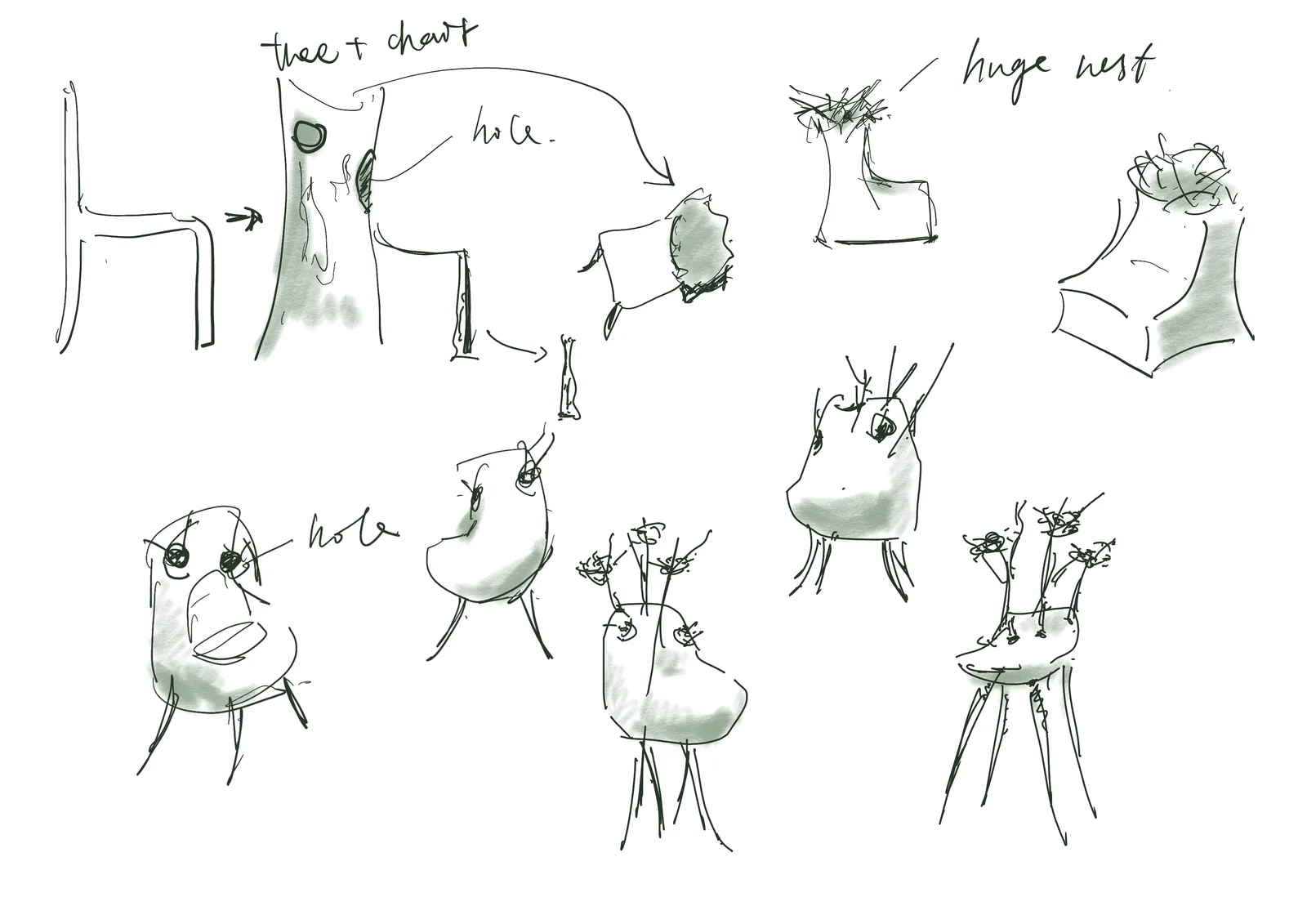
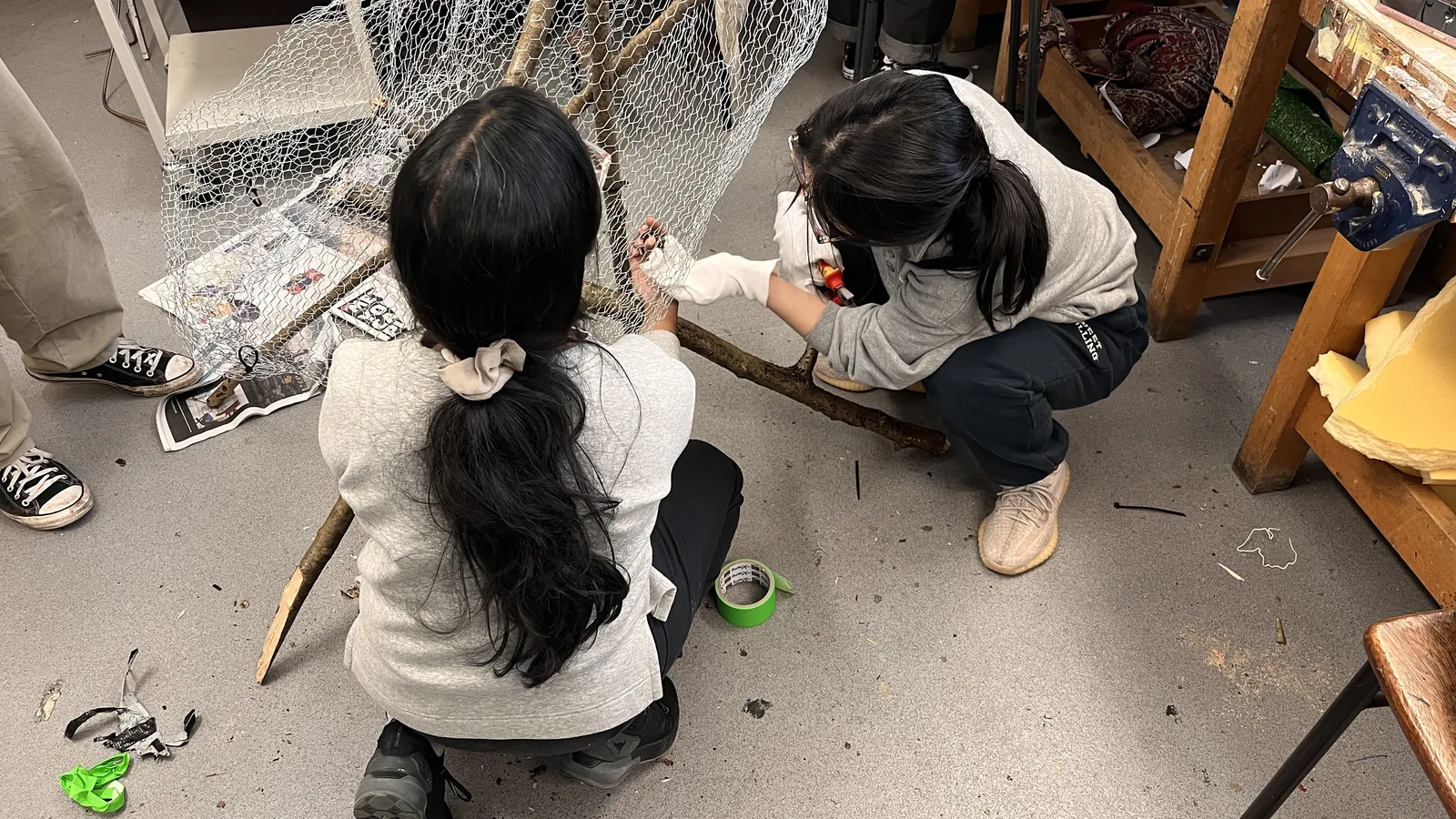
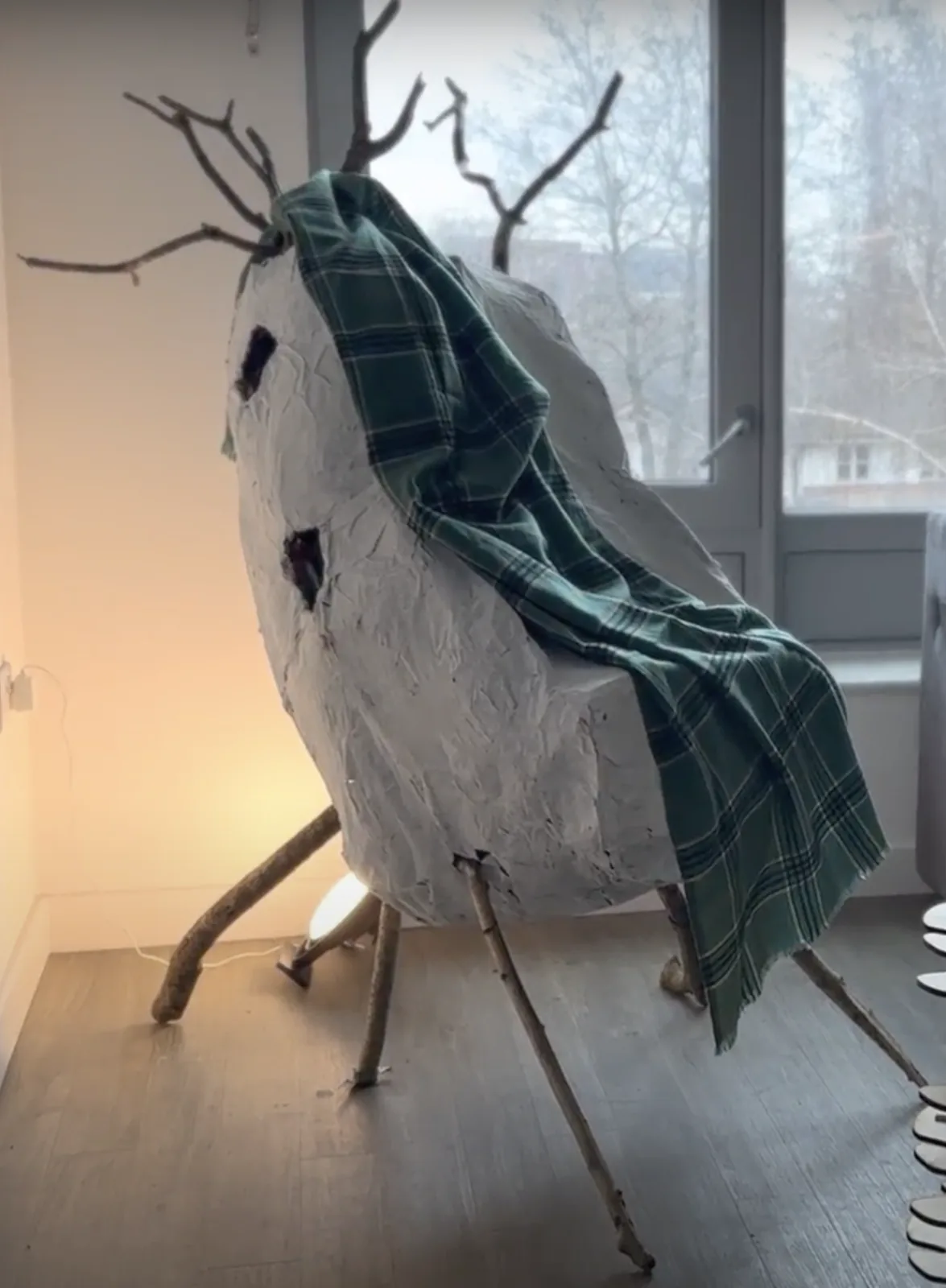
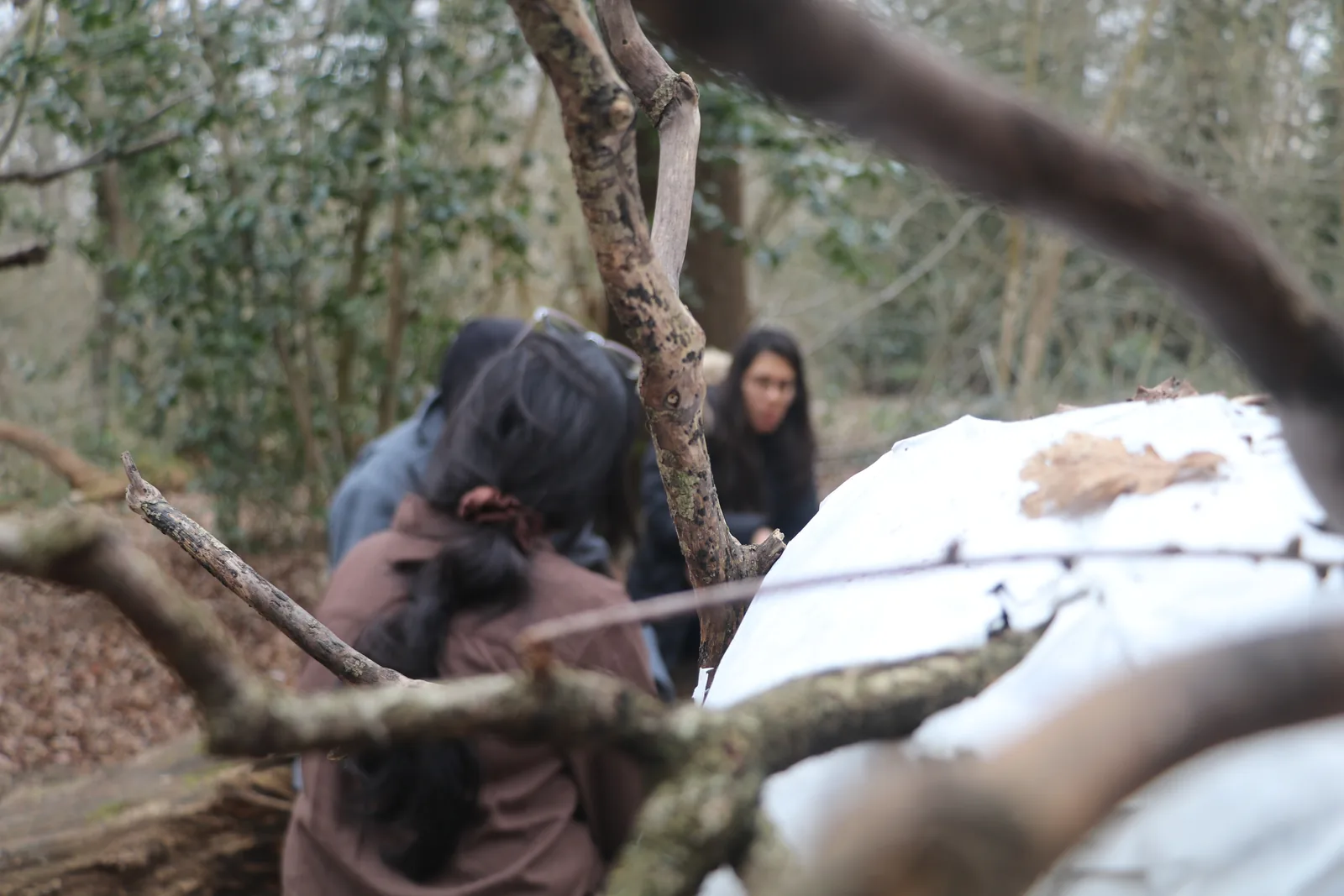
Made with branches, wire mesh and paper as a possible nesting place for birds. Openings in the structure suggest a use shared beyond the human body.
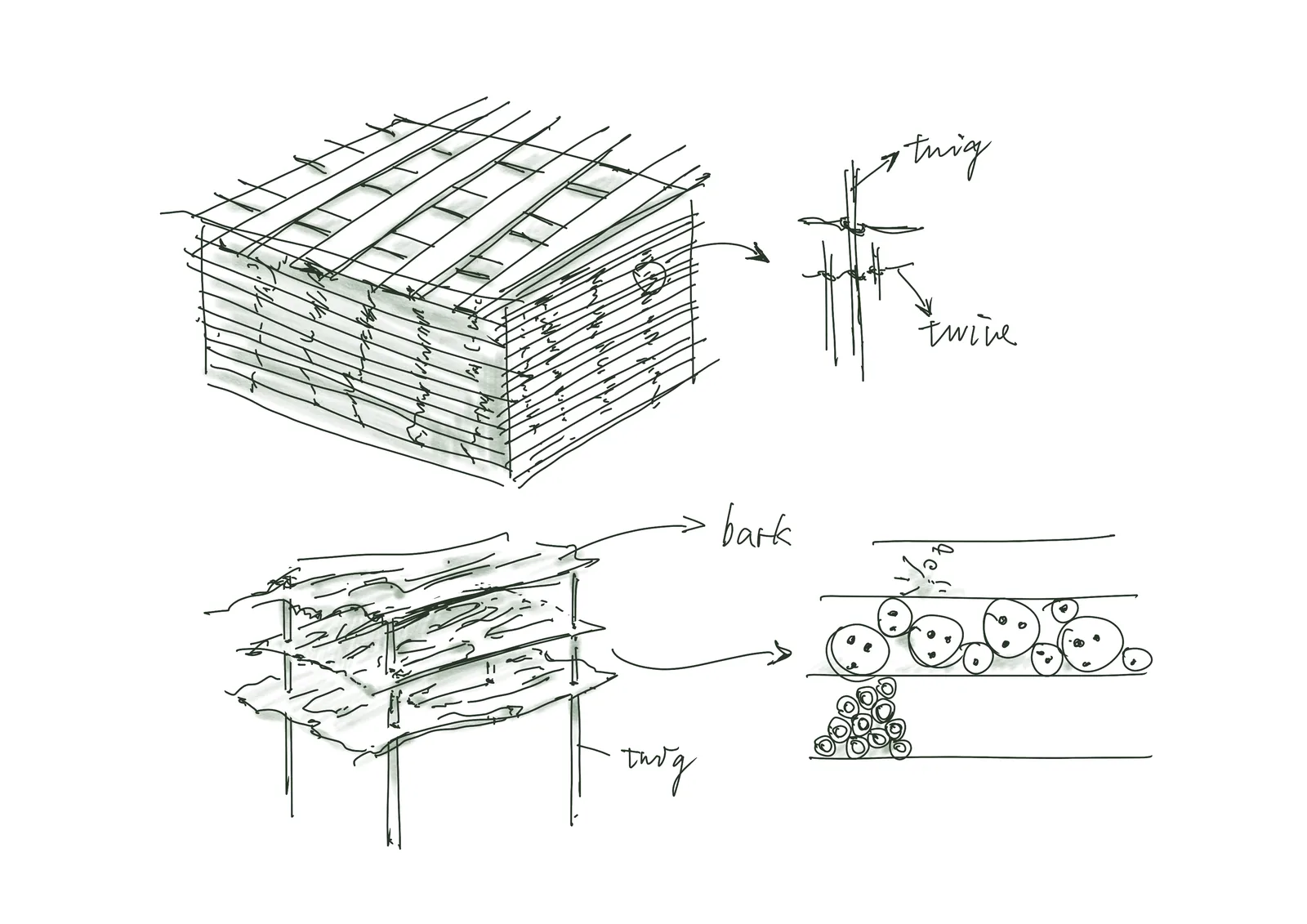
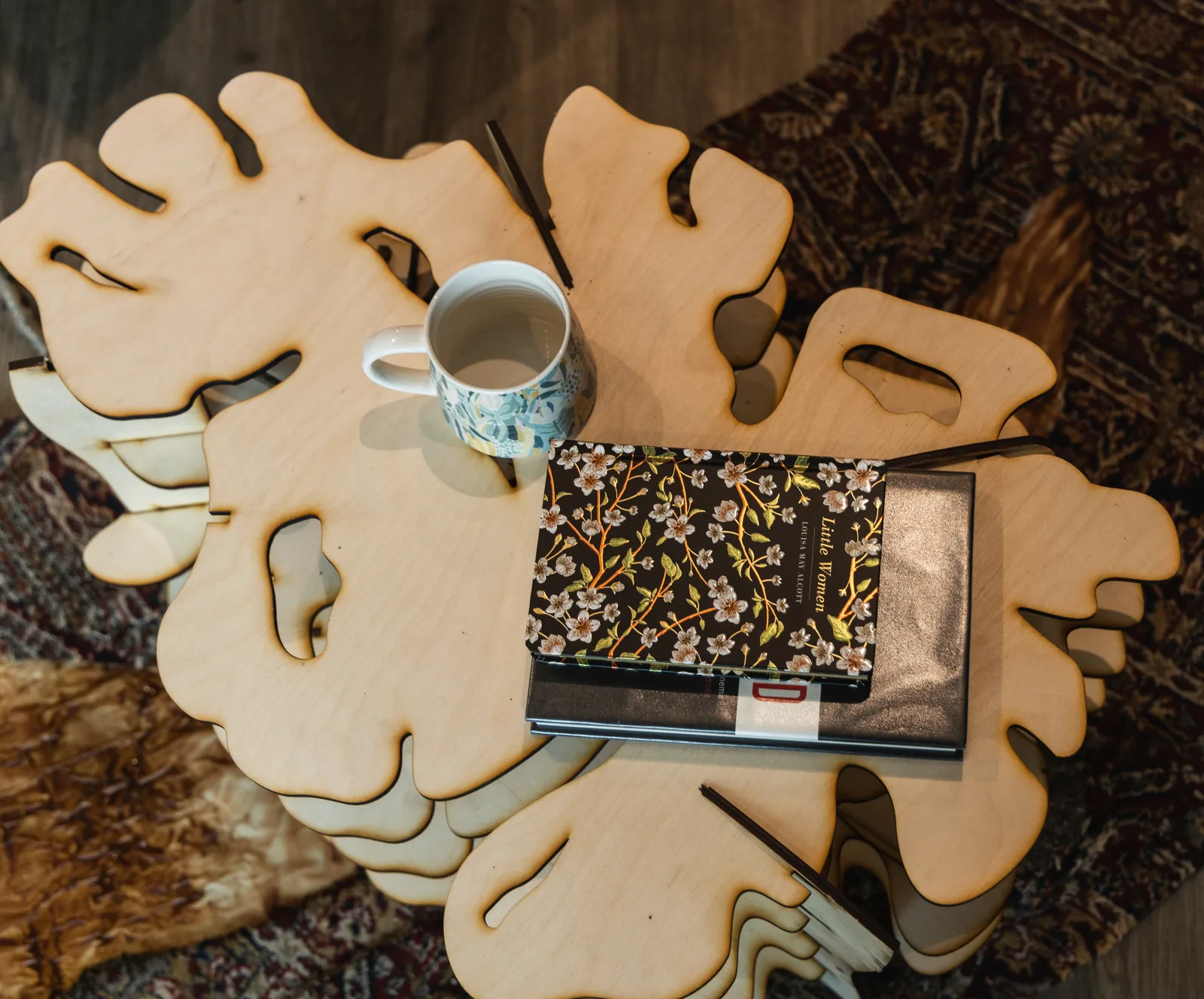
Bark, twigs and layered wood make a small habitat for insects. Inspired by insect hotels, it is both furniture and shelter.
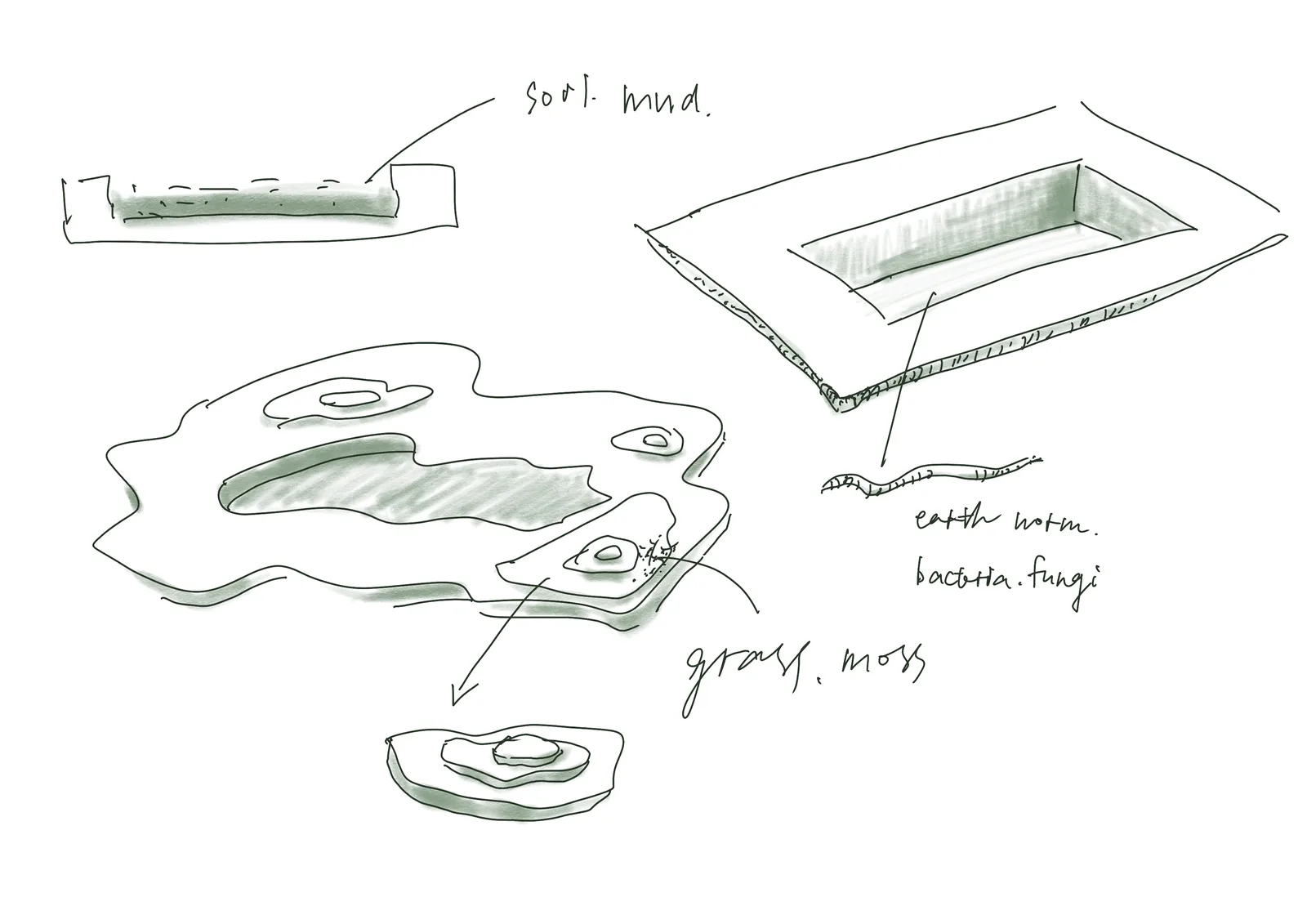
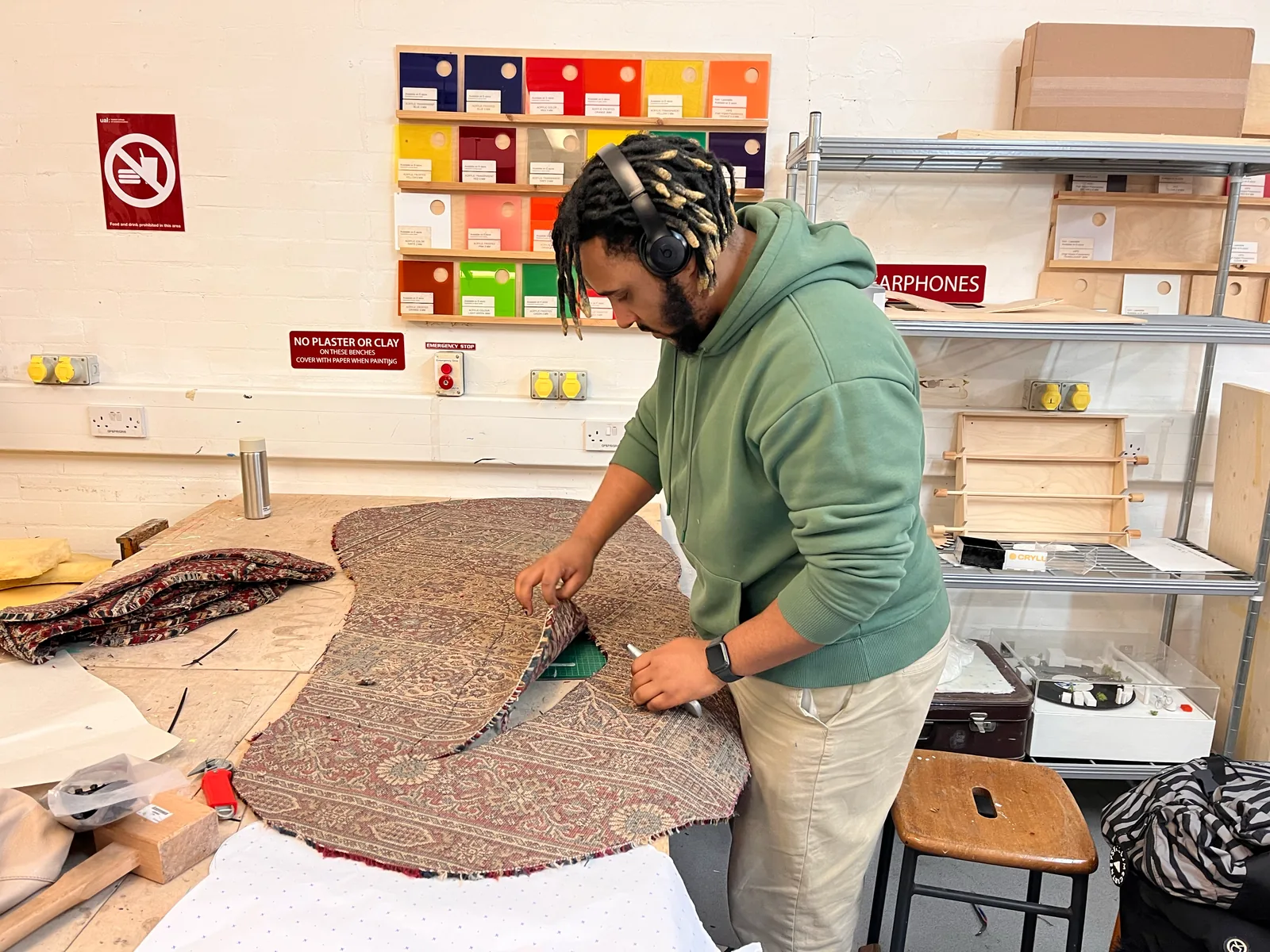
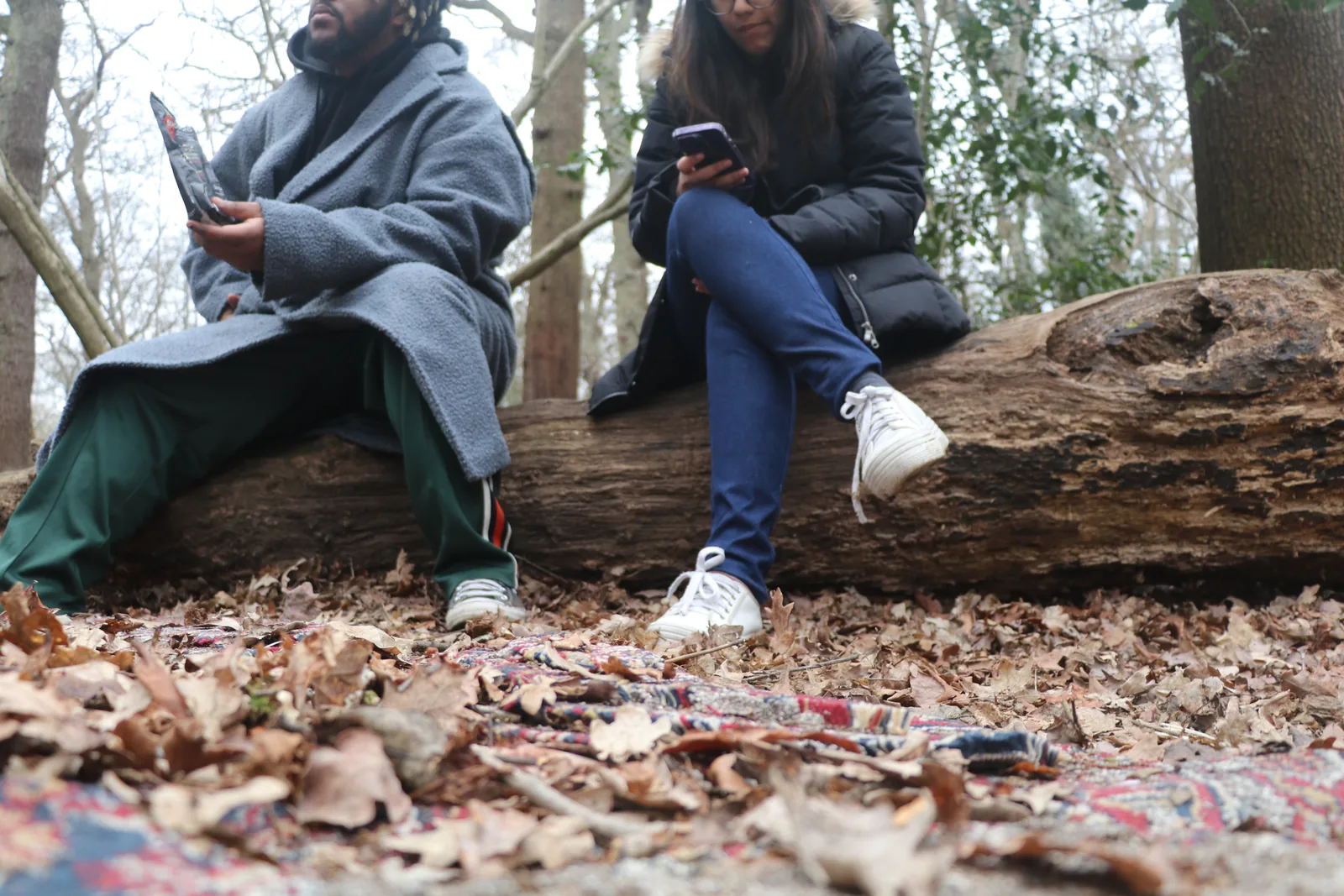
Soil, humus, moss and plant matter bring underground ecosystems indoors. Its irregular form ties the room to the natural ground.
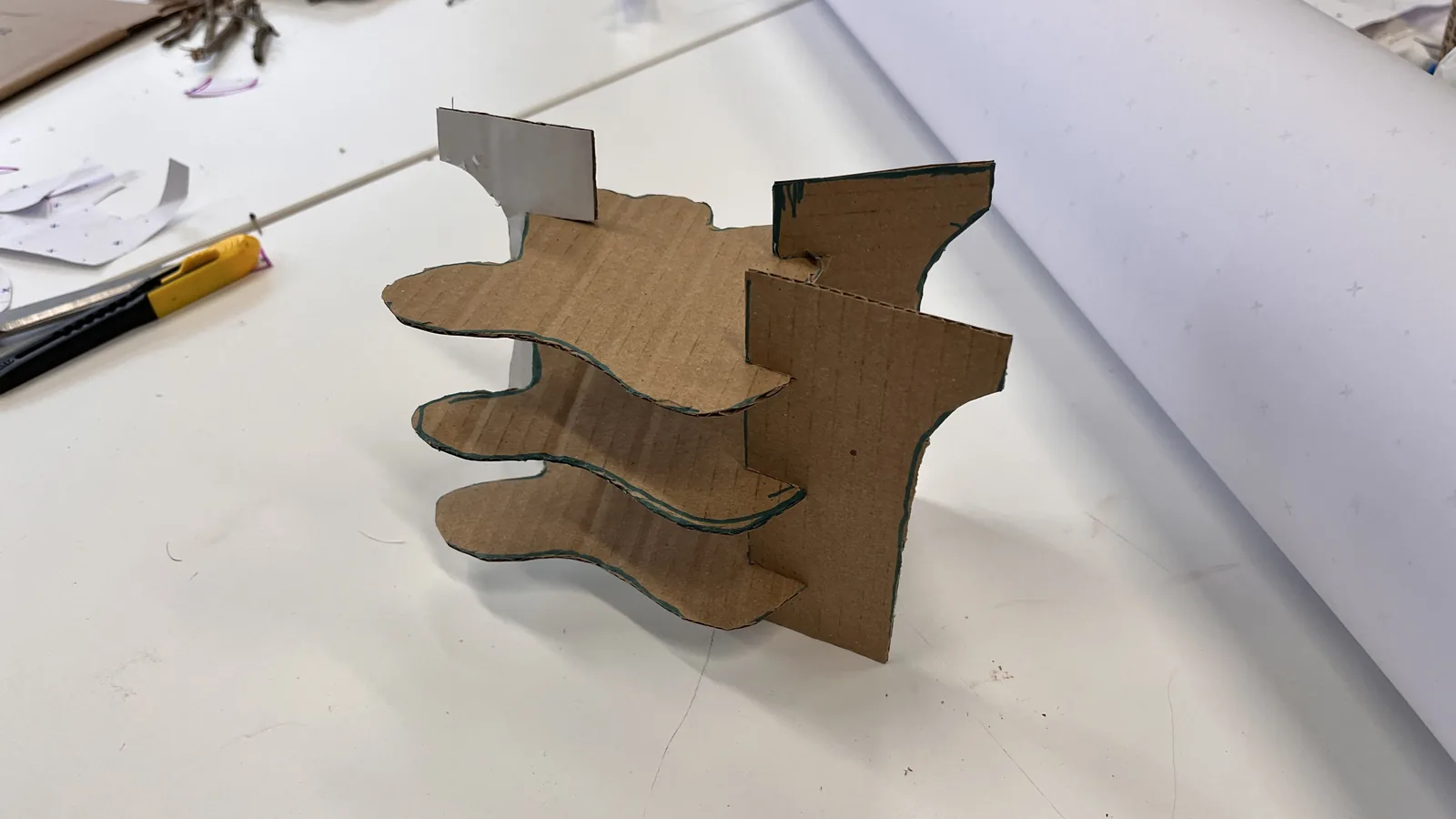
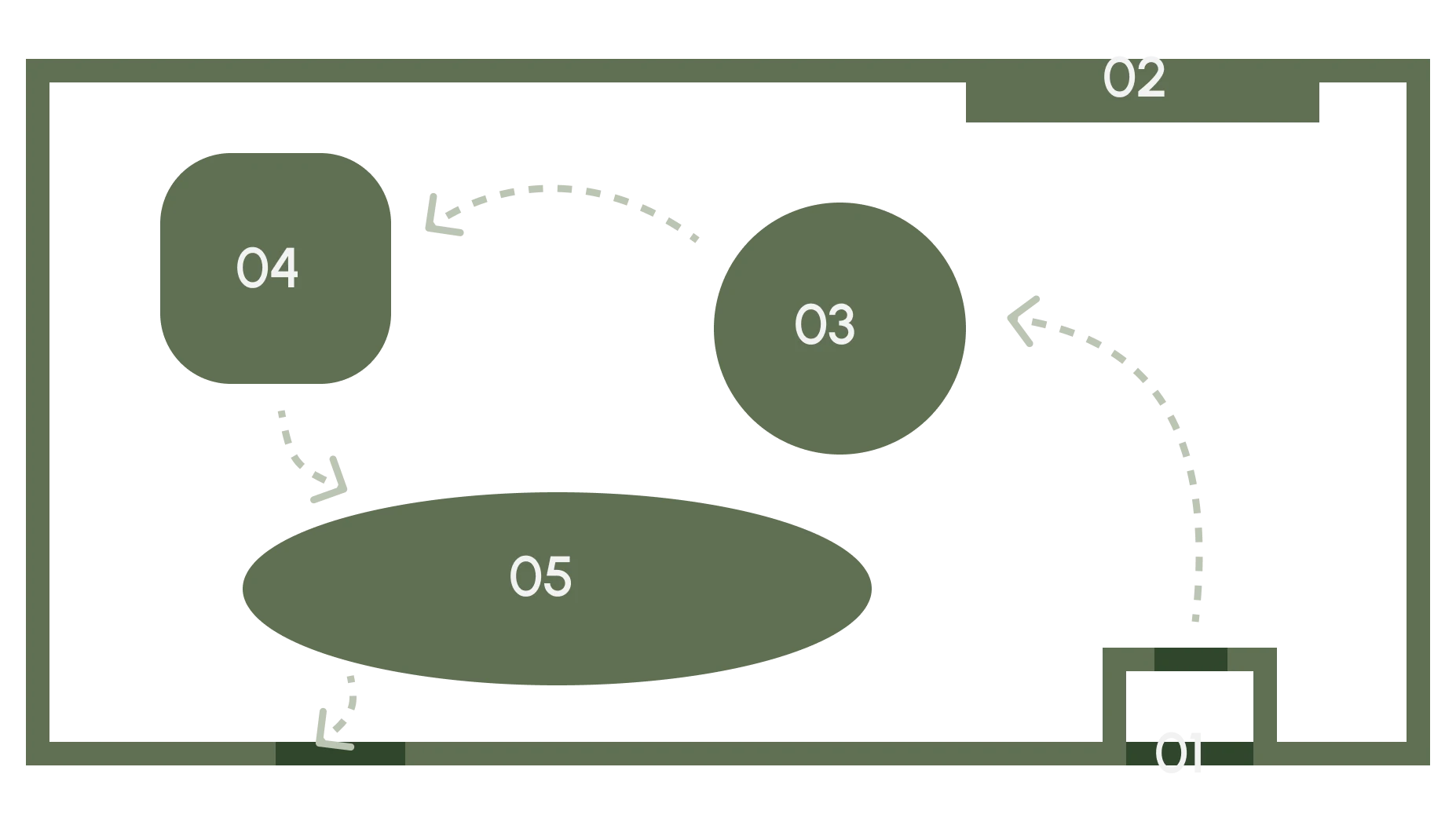
We planned the visitor’s route through the room, then tested it in a scale prototype.
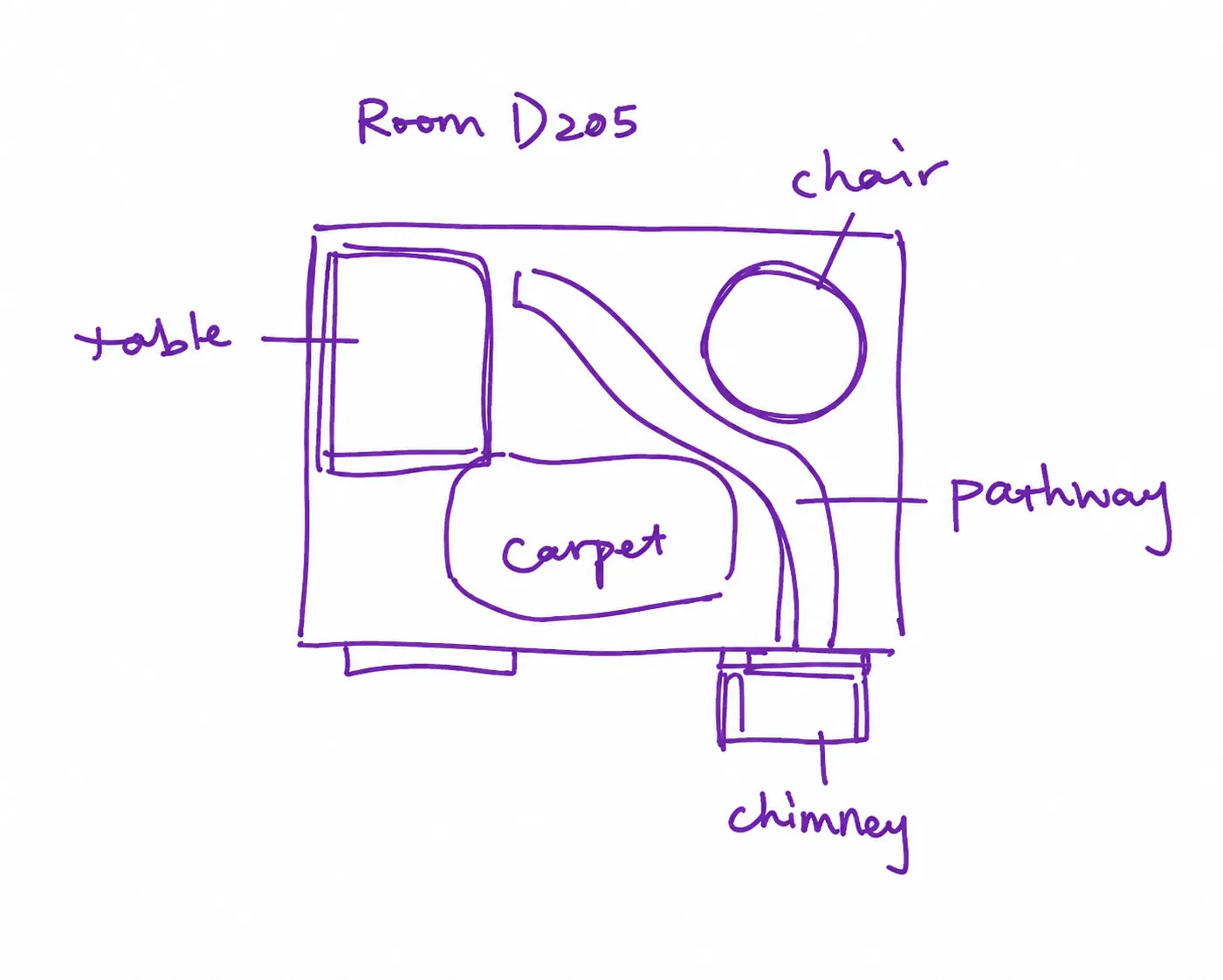
The route through the room: chimney, pathway, chair, table and carpet.
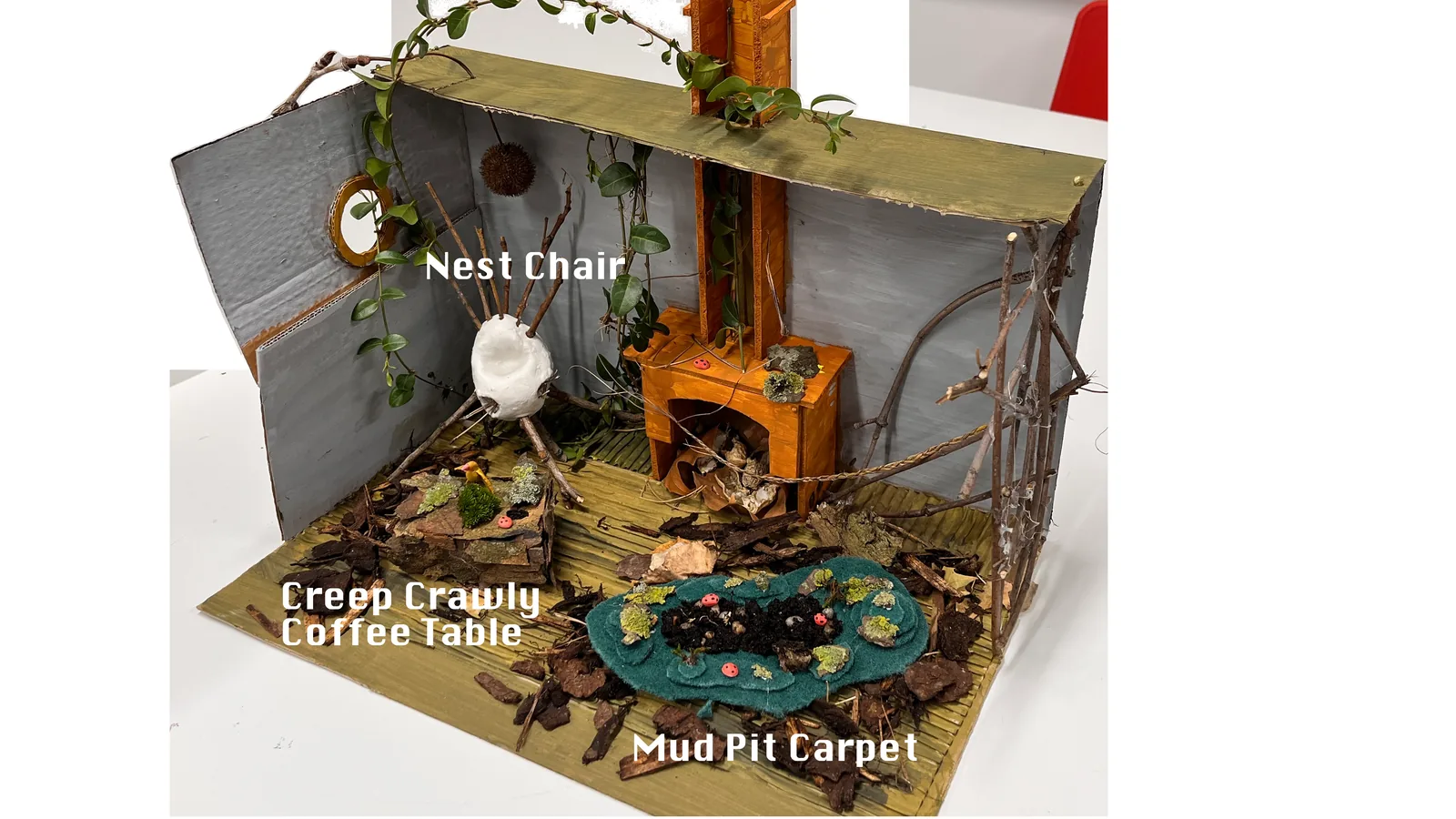
A scale model of the room and its three pieces, used to test the route.
Visitors come in through a chimney-like route, shifting from human resident to non-human visitor.
They move through a room where familiar furniture has become a habitat for birds, insects and underground life.
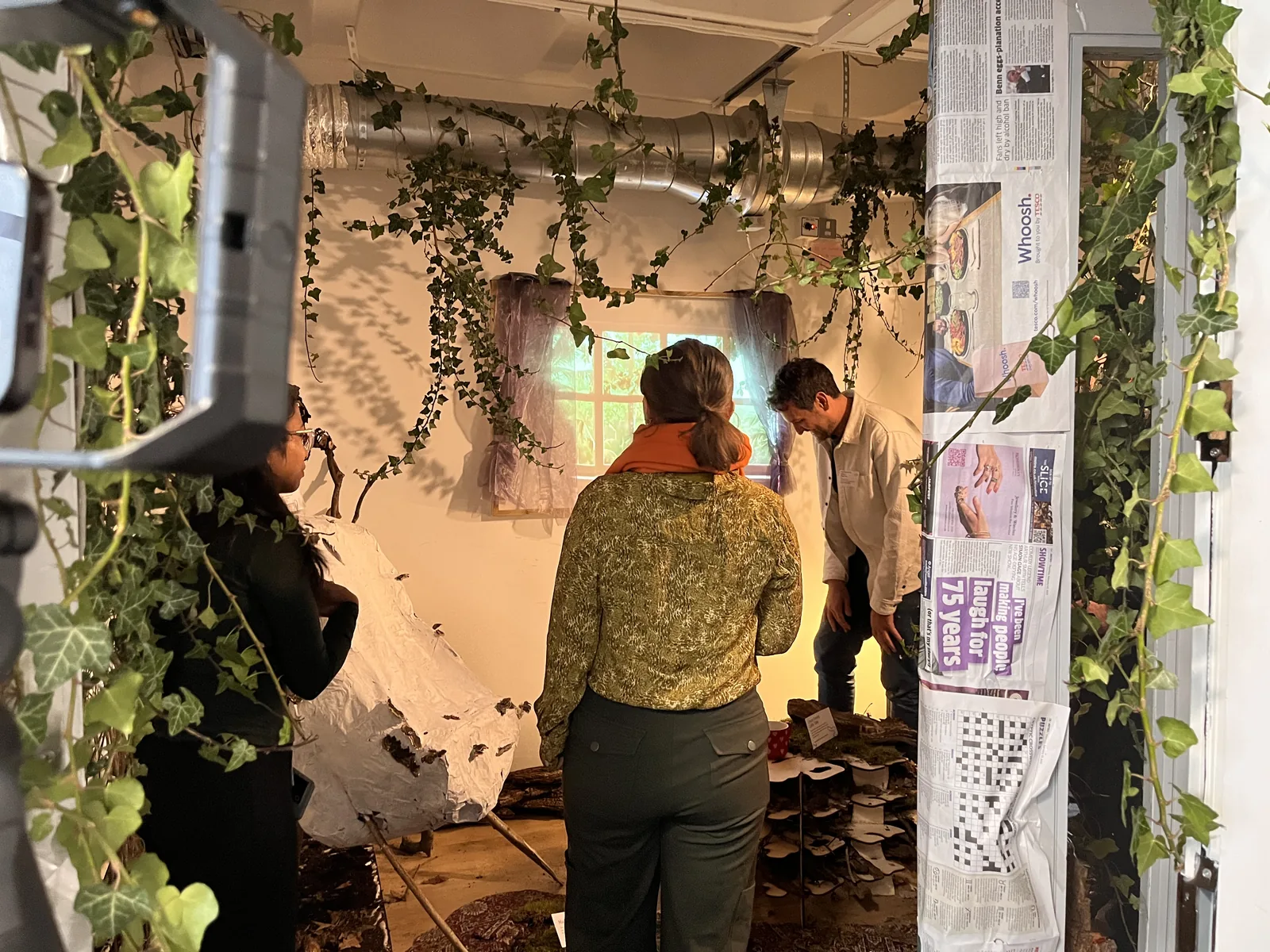
Projection, sound, natural materials and scent make the room feel less like a display and more like a shared home.
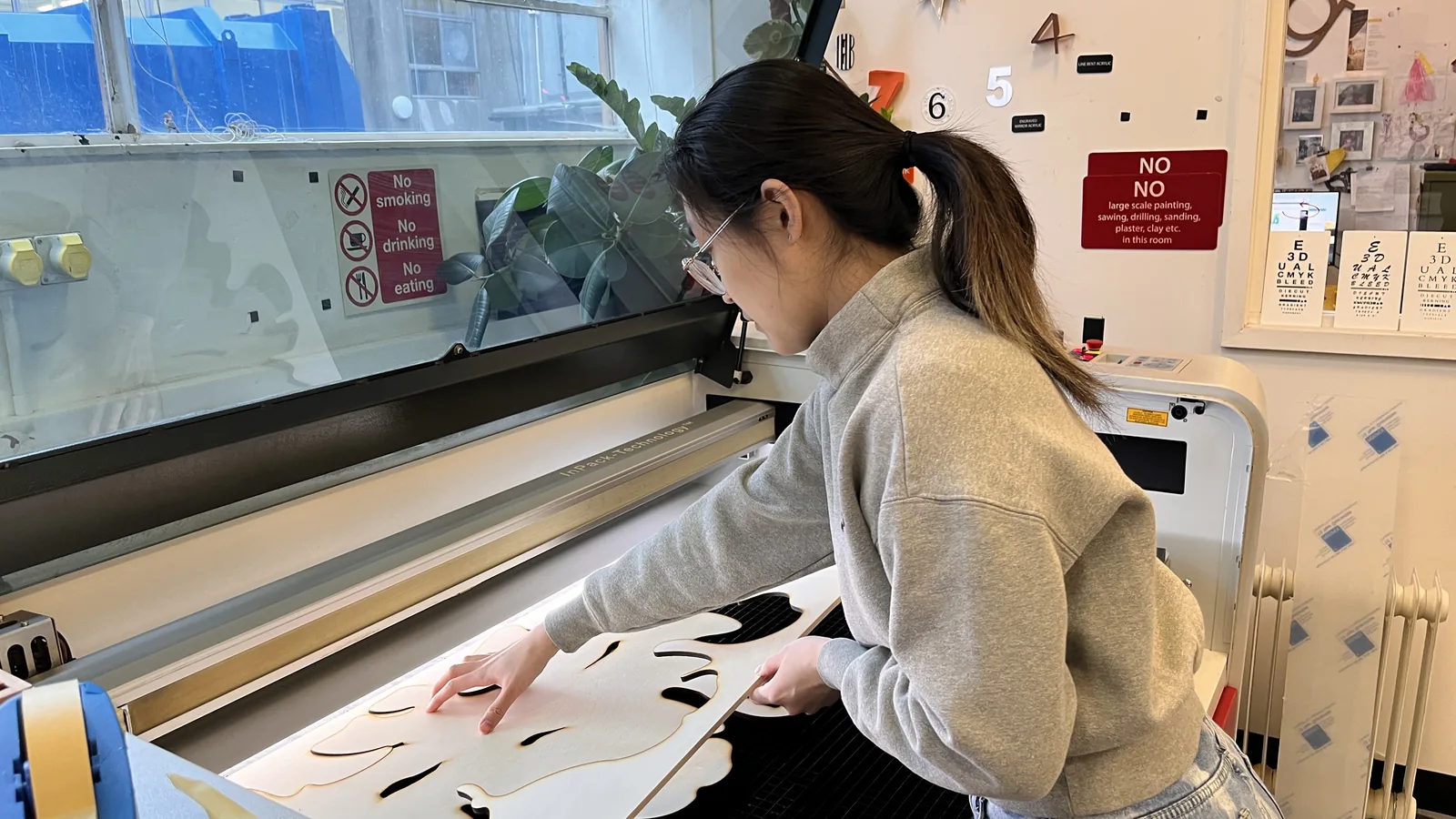
Each piece was built by hand from the materials it was meant to host life in, then brought together in the room.
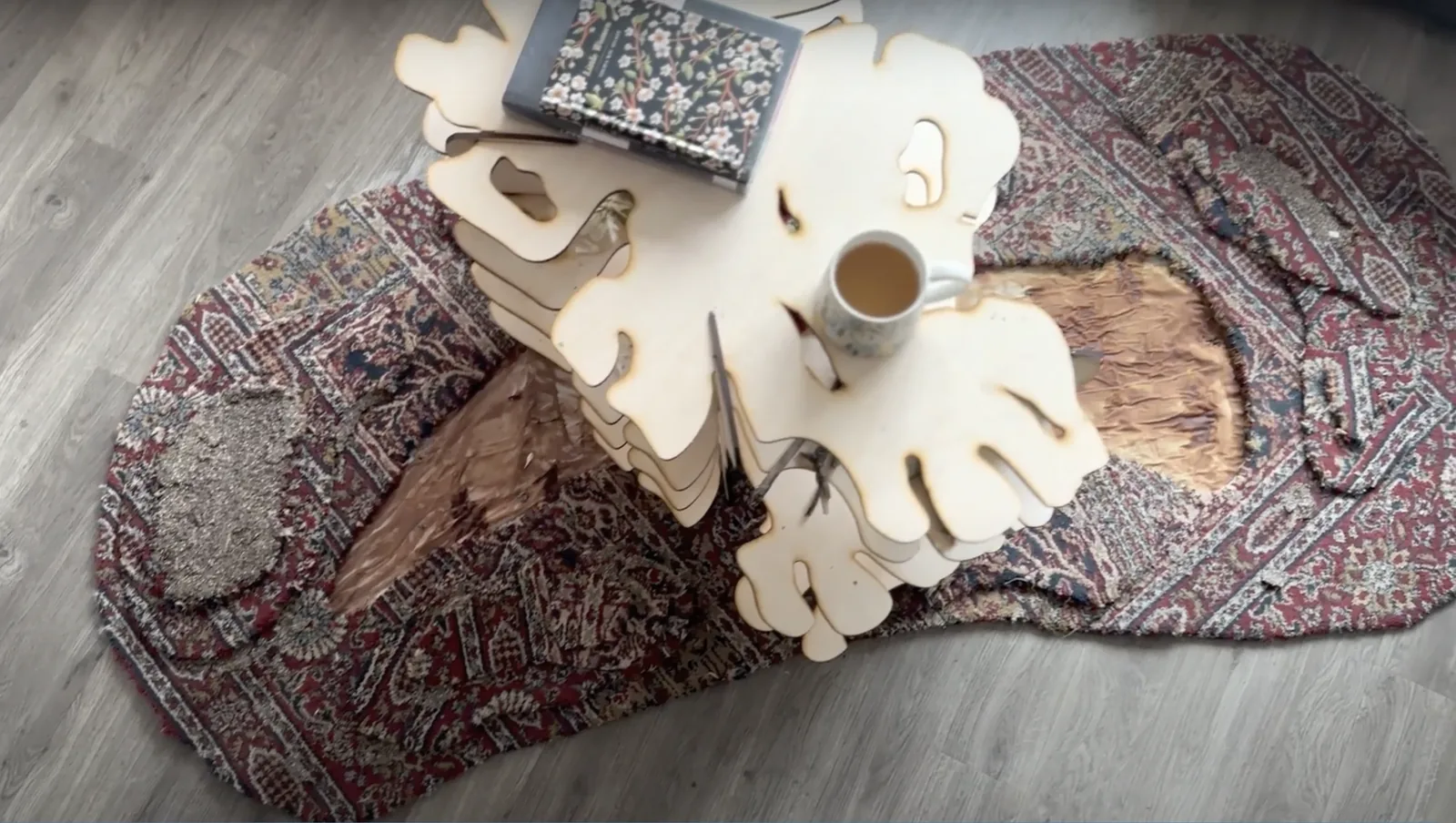
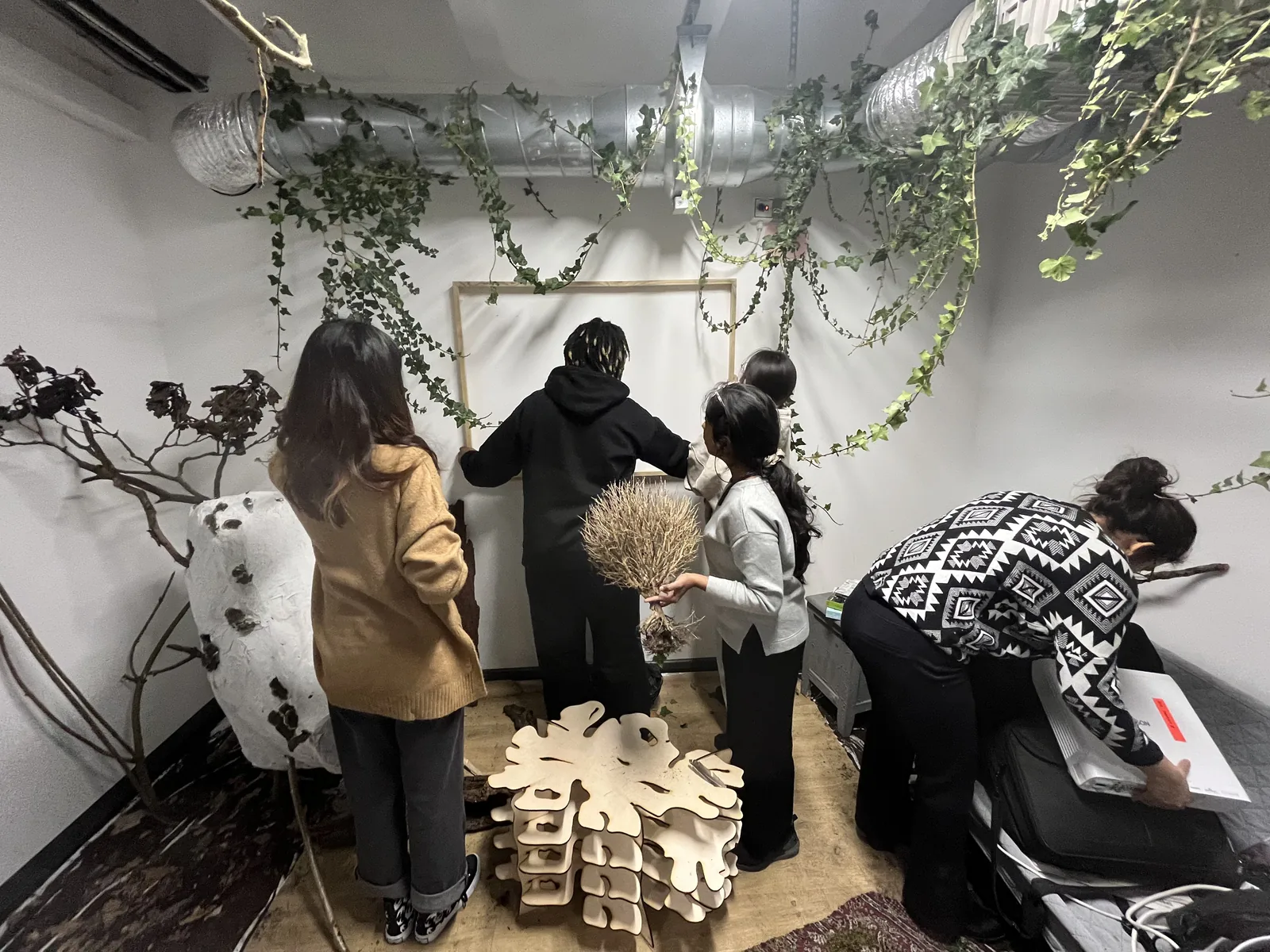
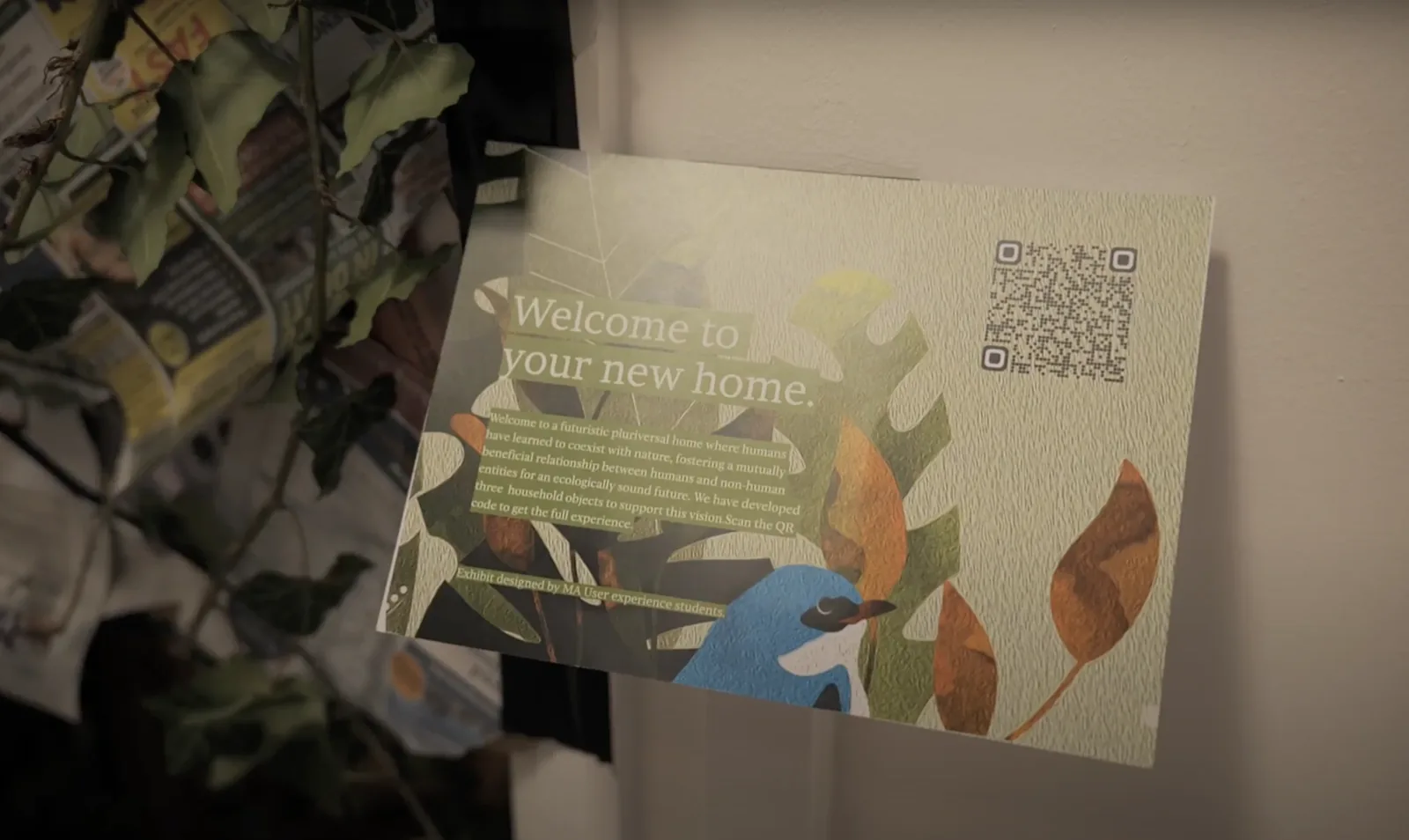
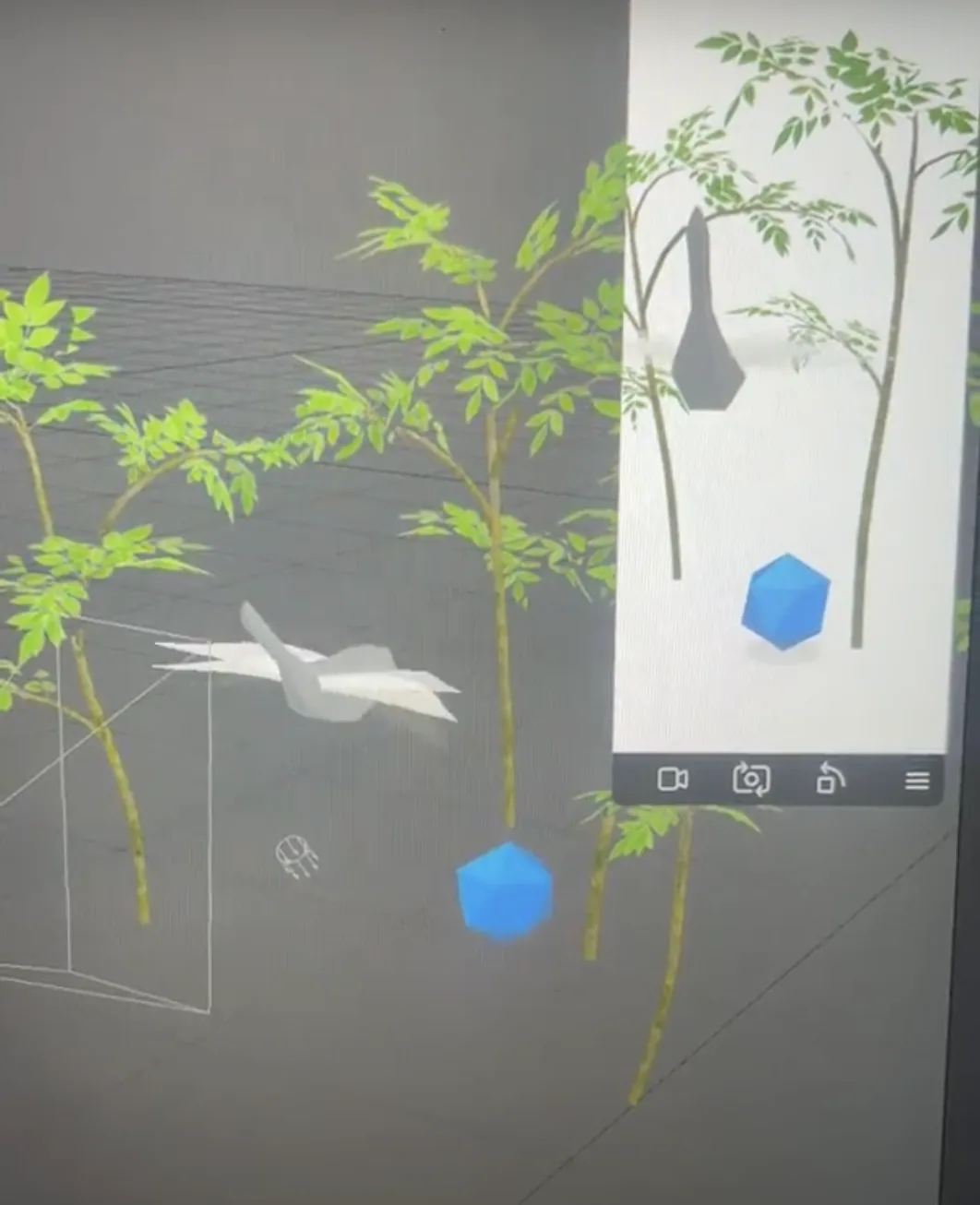
The final outcome was an immersive room tour that invited visitors inside a speculative multispecies home. Before entering, they watched a short promotional video introducing the room and its idea of co-living, then went in and explored the space in person.
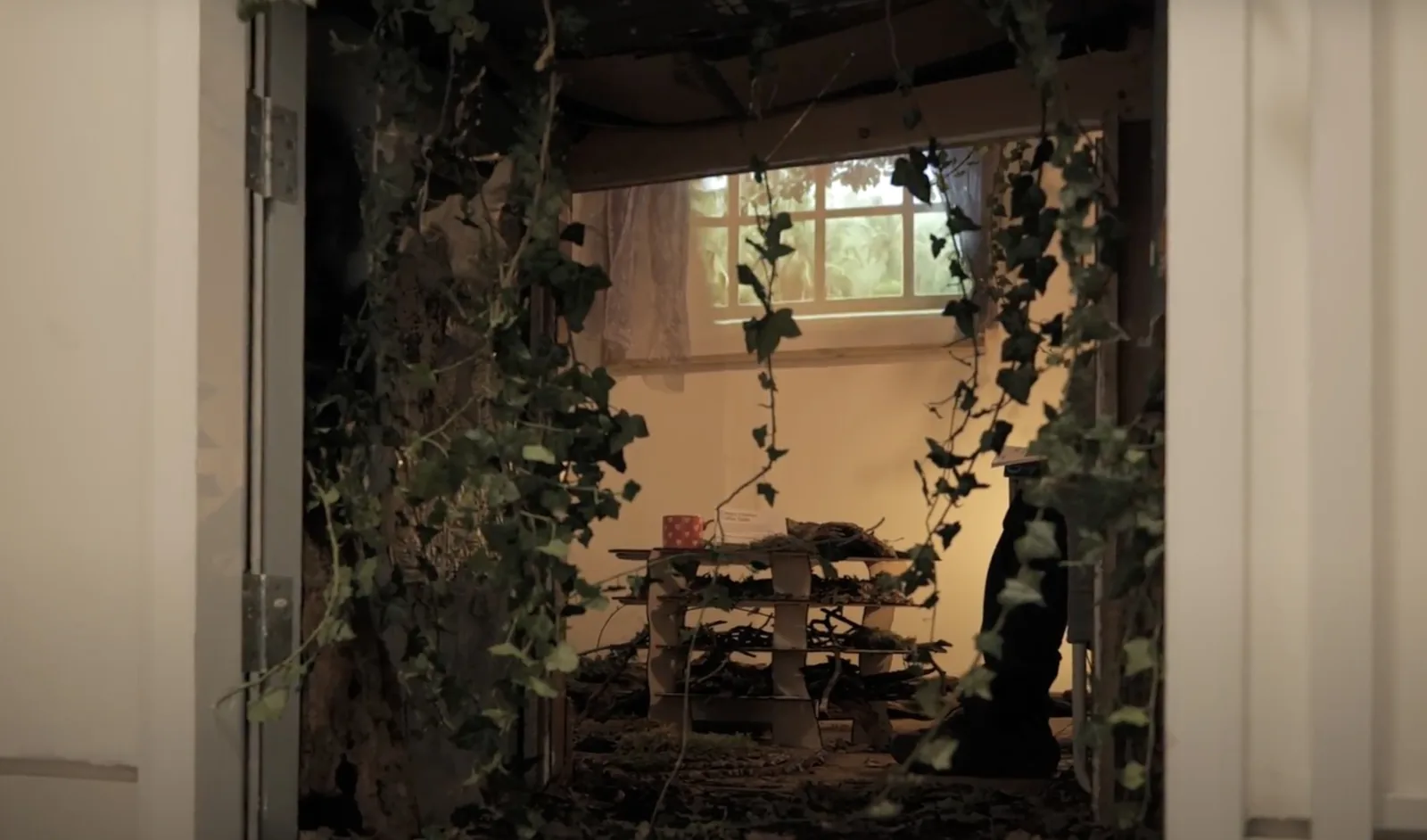
Visitors crouched through a chimney-like opening, a playful shift in perspective from human resident to non-human visitor.
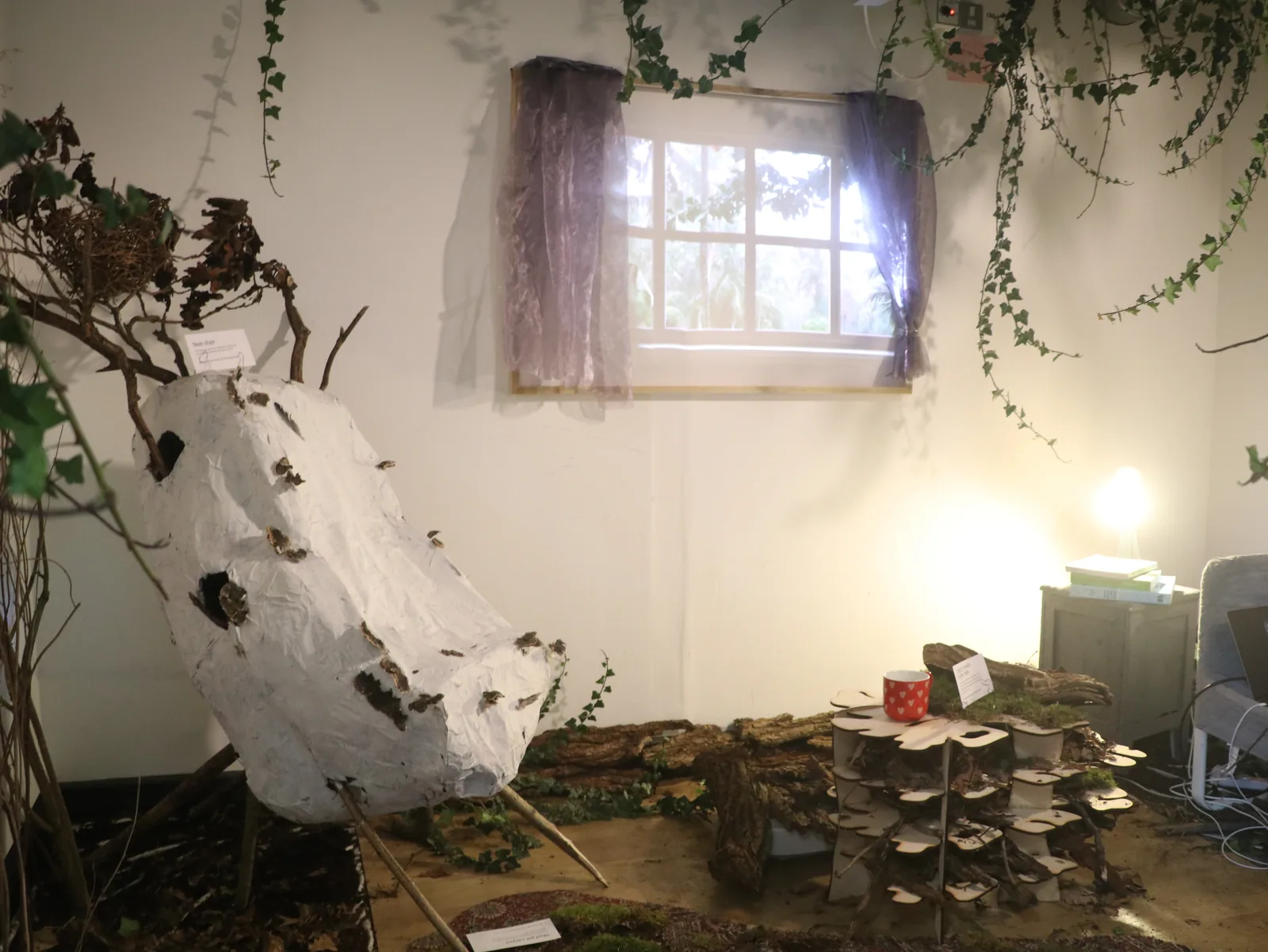
A projected forest view outside the window connected the room to the wider ecosystem beyond it.
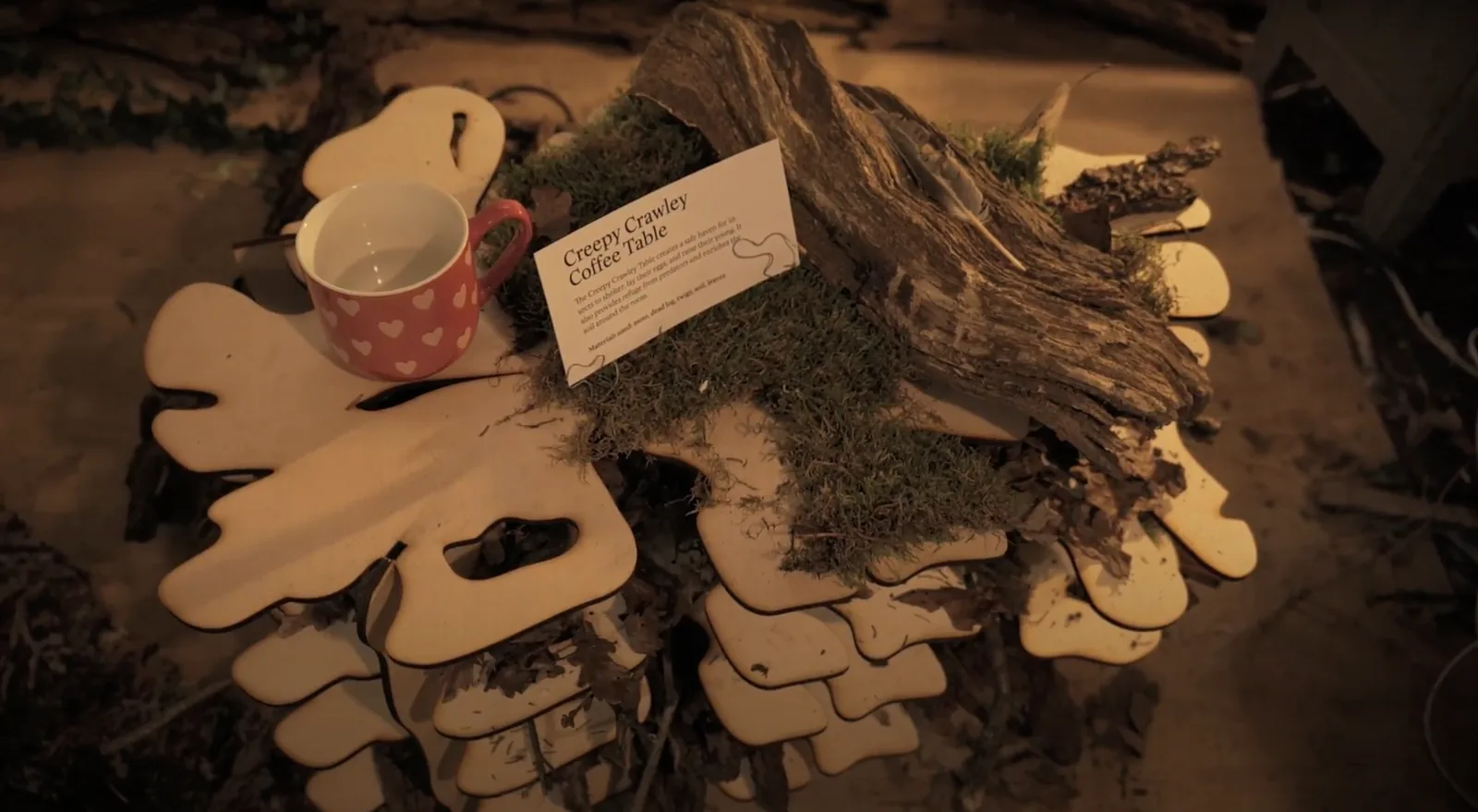
A small habitat for insects, suggesting everyday furniture could support other forms of life too.
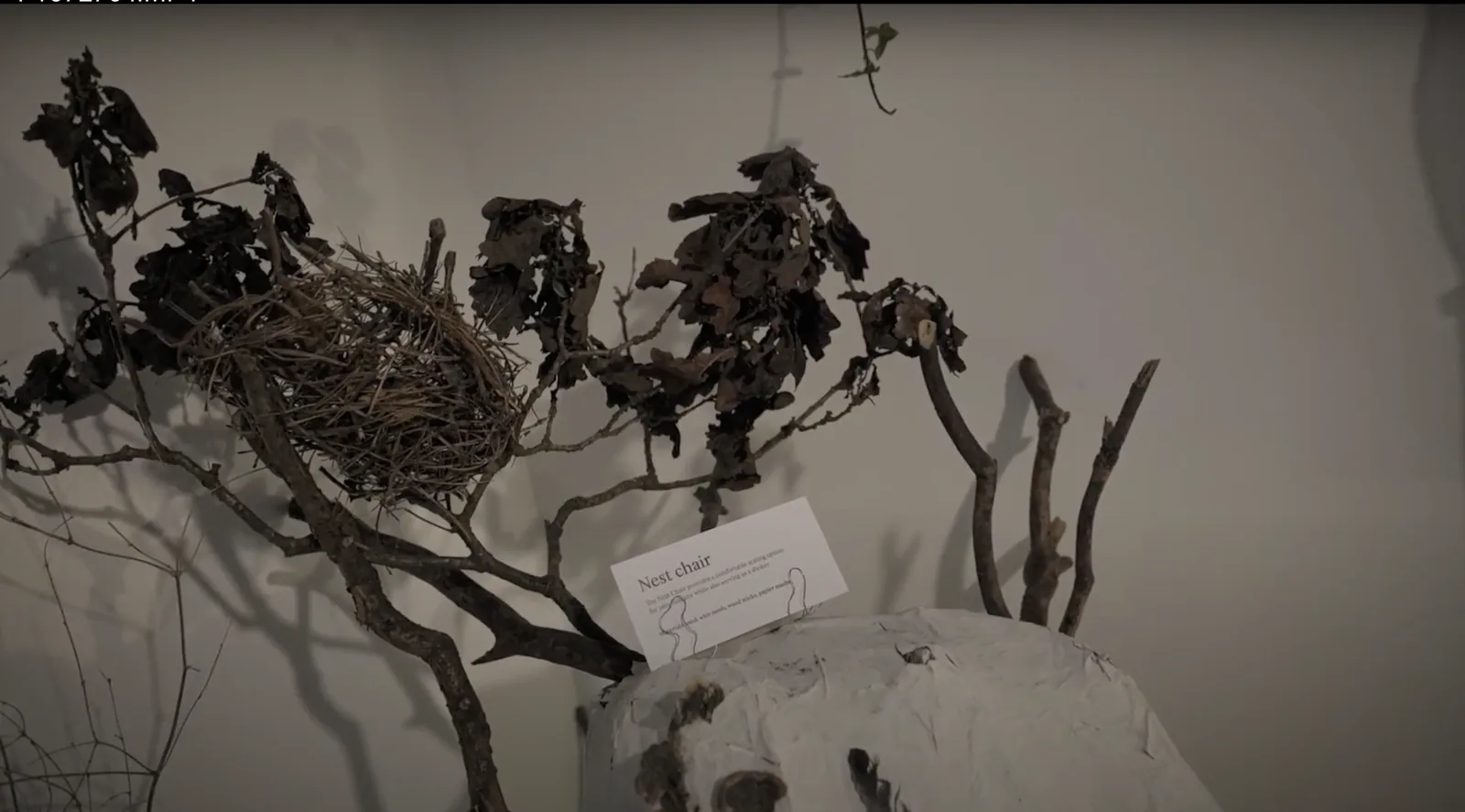
Designed with nesting in mind: a piece of furniture birds might also live in.
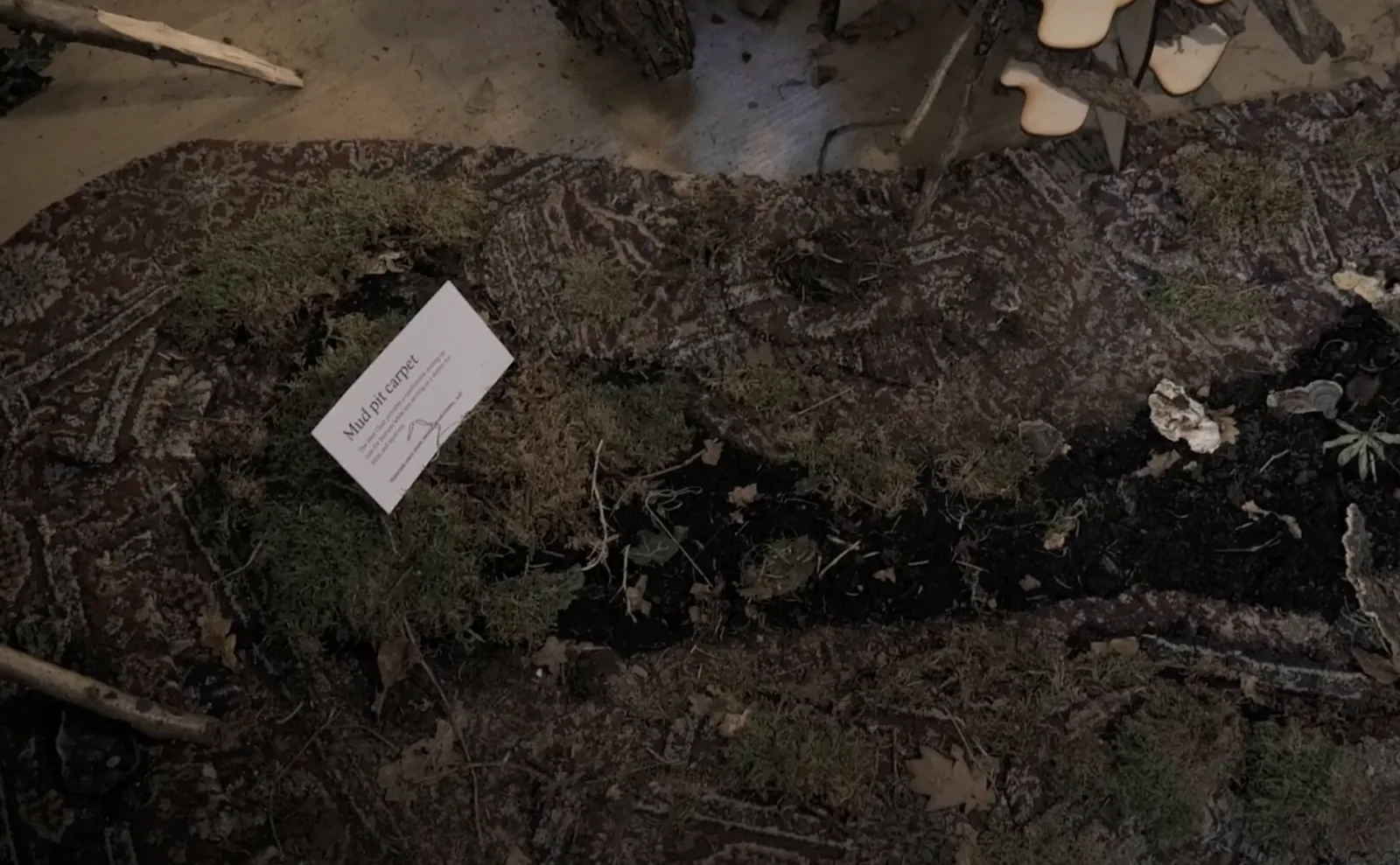
Soil, leaves and organic matter brought indoors, drawing attention to the less visible life underground.
Seeing ourselves from other species’ perspectives
“We are all lichens now.”
Donna Haraway, Staying with the Trouble
I was very inspired by this line. To me it suggests that humans are never fully independent or self-sufficient: we are shaped by our relationships with other people, with nature, and with the many species we live alongside.
Although the project began as a non-human design exploration, it also became a way to question human-centered thinking and to open up more room for empathy, care and coexistence.
Next in the file
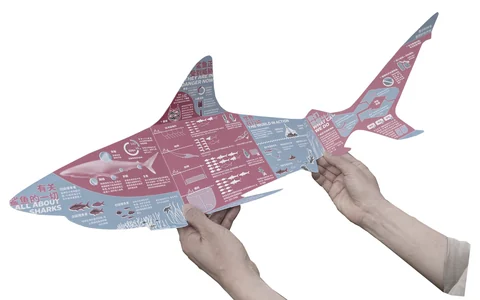
 Save the Sharks
Feb 2022 — Jun 2022
A shark-shaped awareness brochure on why sharks matter, what threatens them, and what anyone can do to protect them.
P-ID 0222 0622 · 01
Save the Sharks
Feb 2022 — Jun 2022
A shark-shaped awareness brochure on why sharks matter, what threatens them, and what anyone can do to protect them.
P-ID 0222 0622 · 01